

Alternate title: The Interesting Case of Probably the Last Dragon Age Game BioWare Is Going To Make, But That’s Not Being Discussed Here
The Backstory
Dragon Age: The Veilguard had a bumpy development period, which seems par for the course now with anything related to BioWare and/or EA. Plagued with layoffs of longtime BioWare/Dragon Age folks, including David Gaider, who originated the series, Veilguard has been seen by some as the final chapter of the Dragon Age saga, not necessarily because it is the intended end, but because it would no longer be profitable for the studio, due to poor sales from bad writing, etc.
So, you know, the usual fears that longtime Dragon Age fans have had about the series kicking the bucket.
However, after playing through Veilguard, I think they left it much like they left Origins: assuming there would be no further games, and trying to end the game in a way that felt like an ending. Except unlike Origins, I do actually doubt whether there will be further Dragon Age games, but not necessarily for the reasons stated above. More on that later.
Either way, I could still see my beloved BioWare trying to shine through all the bumps and rough riding that haunted its development and, at times, the final product, and overall I enjoyed my time with Veilguard. Below are some more detailed thoughts on the writing, the companions, and the gameplay.
Warning: Unmarked spoilers below.
The Writing
I read a long time ago that Dragon Age was inspired by Lord of the Rings and A Song of Ice and Fire, and once I was more familiar with A Song of Ice and Fire (ASOIAF) I saw how these two fantasy powerhouses came together in Origins. But, like ASOIAF, I think Dragon Age had so many small plot threads running by the time Veilguard came around that the writers had to pick a few to focus on, and while they produced a game that followed with the lore of the previous games, there were moments when some story beats and relationship interactions felt flat or contradictory to my impressions from previous games – at least to this one Dragon Age fangirl on the internet.
Don’t get me wrong: the story of The Veilguard is an epic one that reminded me of the world-ending urgency of Origins, but we’ve come a long way, baby, since Origins. I enjoyed this game despite some of my (occasionally passionate) critiques of it. I think it rounded out the Dragon Age saga very well, overall.
One thing I will gently suggest at this point is that the folks on the internet who claim this does not feel like a Dragon Age game have possibly said this about almost every game except Origins. So my question to them would be, What makes a Dragon Age game a “Dragon Age game”? But that is a musing for a separate post. There are times when, by my definition, this is dyed-in-the-wool Dragon Age, and then there are other moments where I feel like I am playing, well, a Dragon Age game made for an audience that is removed from Dungeon’s and Dragons and grimdark fantasy in general.
Either way, Veilguard at times feels like it was written by people who knew they were releasing a game into a timeline where young audiences judge writers/authors based on the content they write. The dangerous idea of “If X is portrayed, then the author supports it,” is rampant on the internet and in fandoms, and it is possible some of the questionable decisions were to waylay this.
This, I can understand, because it also happened to me. When I posted my fanfiction, I braced for people to scream at me about how I had killed and then resurrected the main character, because they may have disliked the “Christian” imagery on my pagan character. Boy oh boy did I have a few people who screamed at me, but it was because I was anti-gay and inconsiderate of the potential mental health of my readers.
Yep, you read that right. I – a therapist and homosexual – am (apparently) anti-gay and don’t care about mental health. Holy moly.
So, poor little Dragon Age may have tried to appease these types of folks, which created an at-times questionable experience for the rest of us.
BUT… I am forever a Dragon Age fangirl. I genuinely enjoyed playing the game (more on that later), and dumped over 100 hours into it… but I also hand-waved a few things by imagining how I would rewrite them if I ever get around to this game in my ongoing Dragon Age fanfiction series. So there’s that.
The Good
The game pulled out all the stops when it came to identifying what made the previous Dragon Age games beloved, and pulled in some mechanics from the Mass Effect series that had my little fan heart grinning with recognition, knowing, and aching dread. The “origins” mechanic is back, with players able to chose a faction/origin story for the character that went beyond a weapons class and a race, and, like in Origins, there is special dialog that occurs because of it. The character creation is incredibly comprehensive, and includes options to add acne scars, vitiligo, heterochromatic eyes, and nuanced gender identity options.
Veilguard also includes very personal stories, which was the most praised aspect of Dragon Age II, as it personalized the conflict. The personal stories were interesting, even though it was sometimes jarring when companion characters state (at least once, but I think it happened twice or three times) that the companion characters had their own stuff to sort out before they could be ready to face the Big Bad.
I think this was in response to Mass Effect 2, which had a similar “loyalty” mechanic that influenced the success/survival rate of the final mission. I suppose I was not the only one who accidentally triggered the end game before I had completed all the side quests, and I suppose I need to admit that I am ancient by internet standards and gaming media literacy has changed from when I was a wee gamer (which will be discussed in a separate post), so maybe the very blunt, obvious “do the side quests first, dummy” is now necessary, for one reason or another.
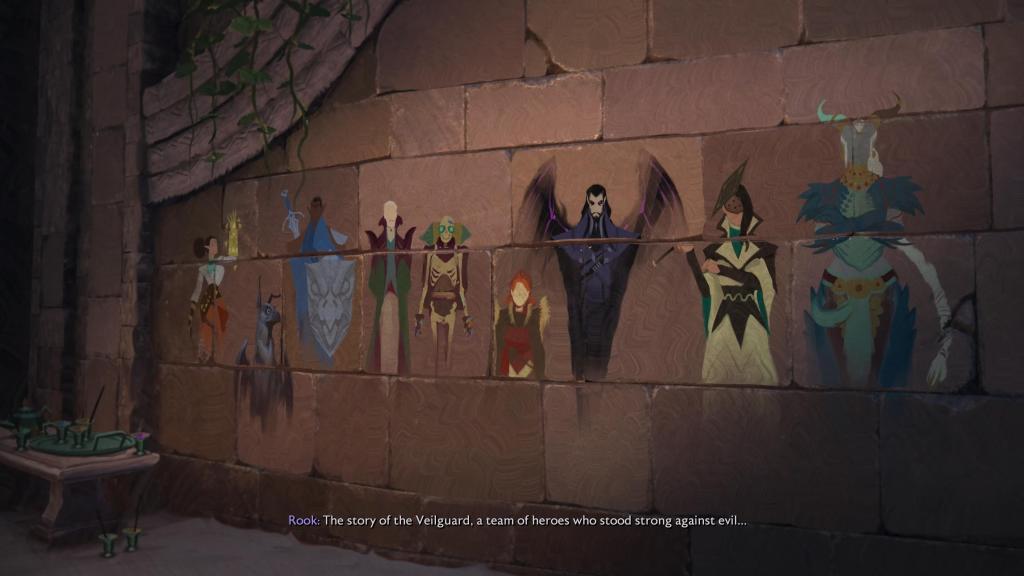
All in all, Veilguard presented a very good balance of personal side quests and main story lines, and the journal did make it clear where each quest fell (faction-specific, companion-specific, story-specific).
But Athena, I hear you say, I read online that the writing was very bad!
The Dialog Writing and Companion Character Mechanics
I loved the story. I thought the conflict was compelling, and presented a natural end to the remaining conflicts left after the mage-templar conflict was resolved at the end of Inquisition. There were parts that were a little clunky, and some that were a little disappointing, but overall I did enjoy the overarching story.
I have lamented the reduction in conversation opportunities with your party companions since Origins, and Veilguard is the continuation of that lament. Giving character-specific, meaningful gifts gets you the same generic, “Oh, thank you!” one-liner, with a 5-second cutscene of your character and the NPC standing looking at each other. Again, compared to Origins, which is the only other game that had meaningful gifts like this, it was quite a letdown.
Similarly, I have lamented the reduction of dialog options, reducing the player character to three lines, with three tones of voice, and occasionally different dialog. I hate the dialog wheel, and I have hated the dialog wheel since Dragon Age II. I do not want to be surprised by the words that come out of my character’s mouth, when I’m supposed to be the one choosing them. But again, this is not a new problem.
Ninjamances are still gone, which I think most fans are glad about, I suppose, but it did seem more natural to fumble your way through, hoping you were saying the right thing instead of just picking the option that had the heart next to it.
Veilguard gives you two “defined” or “formal” relationship stages, one of which says something along the lines of you being casually interested in the person but are not locked into a relationship with them yet/can still flirt with other people, and one that says something like Choose this option and you will commit to a relationship and will no longer be able to flirt with other characters.
I mean, that’s nice, but why not? Why can’t I cause interpersonal drama?
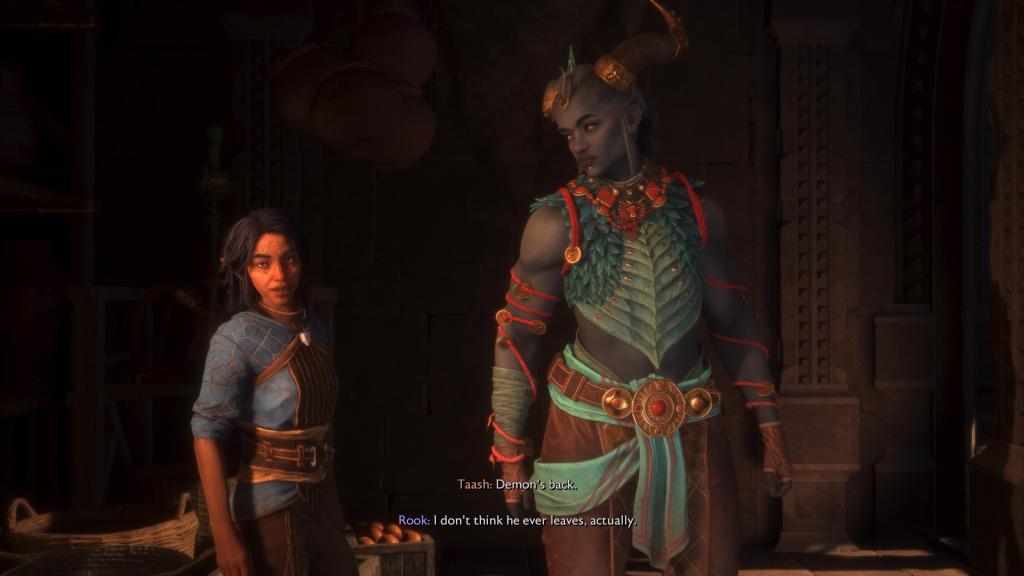
That sounds petty, but I do mean that. Why is the game dictating to me how my character can interact with the party members? Well, the obvious reason is The Budget Didn’t Allow For Programming the Conflicts, but this is one of my biggest critiques of the game. You could be a downright degenerate in Origins if you wanted to, and an absolute menace of a person in your relationships, platonic or romantic.
But Veilguard lends itself well to someone role-playing an upstanding individual who acts like a hero, or a cranky upstanding individual who acts like a hero. Not the worst thing in the world, and I sort of see it like “renegade” versus “paragon” in Mass Effect.
Compared to the mean or terrible things you can do in previous games, like punch Dorian or Solas in Inquisition, betray Isabela to the qunari in DAII, and call an NPC’s girlfriend a “fat cow” and literally stab a dog in Origins (or even kill your party members if they hated you enough to try and fight you), the dialog choices in this game are pretty tame, though.
The part that often comes under fire in regards to writing is the portrayal of one character’s personal quest, relating to their gender identity. I have complicated thoughts on this, because the spirit was there, but yes, I think this could have been handled better, especially from a series that has historically handled sexual orientation with an overall deft hand. Inquisition even had the healthiest portrayal of a straight woman turning down the affections of a same-sex coworker, to the point IRL me was pointing at the screen going, “That’s how I want to be turned down!” and, when portraying the relationship between a gay man and his disappointed father, the game managed to make this very specific, personal story into a universal one that anyone of any orientation could identify with.
DAII took a different route and treated every romance the same way – Anders simped equally over a female or male Hawke, and Aveline thought both male and female Hawkes were just being sweet when they’d flirt with her. Origins had more nuance, with Leliana’s approval rising more easily with a female Warden than with a male one, while being canonically bisexual (compared to DAII’s all-bisexual companions who, at the time, were referred to as “main-character-sexual” or “player-sexual” before they changed it to bisexual or pansexual, depending who you ask).
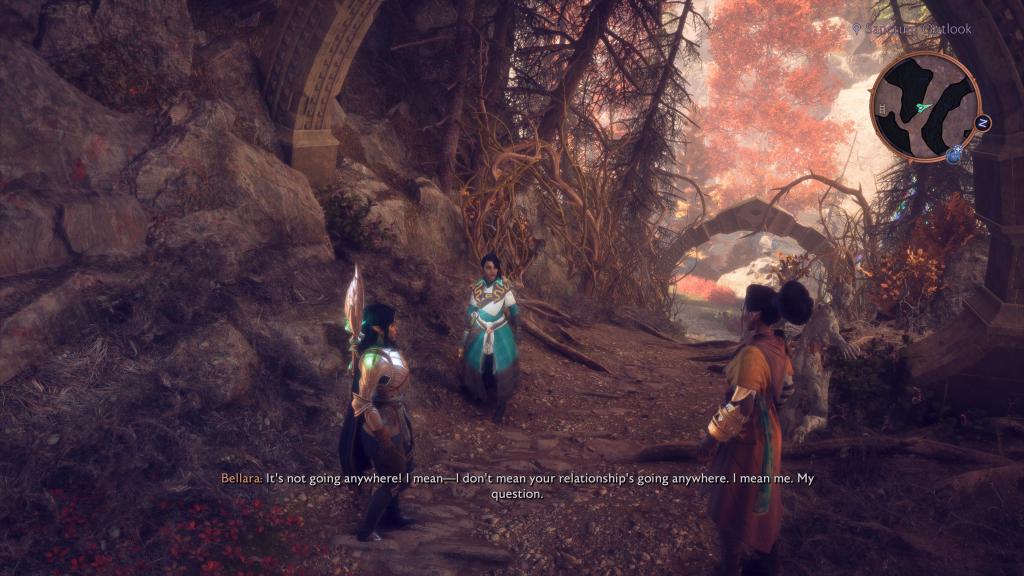
Again, I think this story beat in Veilguard had the right spirit, but I was surprised at how unexpectedly jarring the scene was to witness. Due to this, I was unhappy with only being able to support the companion’s actions with my dialog choices, but I think this is due to the bad portrayal of the scene. After thinking about it a long time, the scene made more sense, but 1) I pride myself on having decent media literacy and it still took me some time to figure out a gentler read of the situation, and 2) the average gamer is not going to put in that kind of work, especially for a trans character, especially in this current social/political climate. But, this will get its own post.
I’ll talk more about character portrayals below, so let’s move on to
The Gameplay
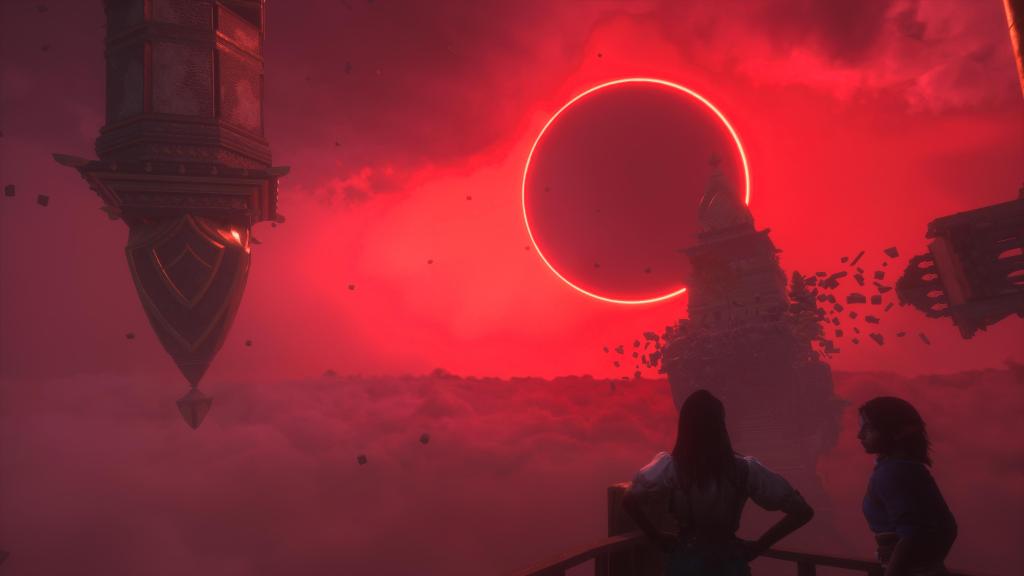
We’ve come a long way, baby. Everything about this game felt good. The leveling is incredibly simple compared to Origins and some other RPGs, but it gets the job done. You’re able to block(!) right from the beginning of the game(!!) and you can even dodge(!!!) without having to unlock it as you level up, unlike in Inquisition. The main character can jump AND if you don’t make the jump perfectly, will grab onto the edge of the cliff (or whatever) and pull themselves up(!!!!). The combat has the same combat wheel mechanic as in previous games, but everything about it feels good. Origins felt like I was indeed playing a game that bridged the gap between tabletop and action RPG, DAII was faster and felt better, Inquisition seemed to just keep with what DAII did well, and Veilguard took that and made it feel good, and look amazing.
I could comment on all kinds of silly things, like how the running looks like someone running, not sashaying as sometimes happened with women characters, or how you can pet dogs and leave coins in beggars’ plates, and how everywhere Rook and Co. go feels alive, whether walking through a forest or traveling through a rainy city or traipsing through a house of the dead.
The game just felt good to play. It was fun to play.
I also really liked that the game made you live with your decisions, which sounds silly, but there are a few times where sacrifices occur (as they do in BioWare games). One time it was pretty clear what they were doing (aka, there is a moment like the Virmire Decision in Mass Effect), and one time I was actually shocked when a character got snatched and (I thought) killed, because they seemed to have survived the initial encounter.
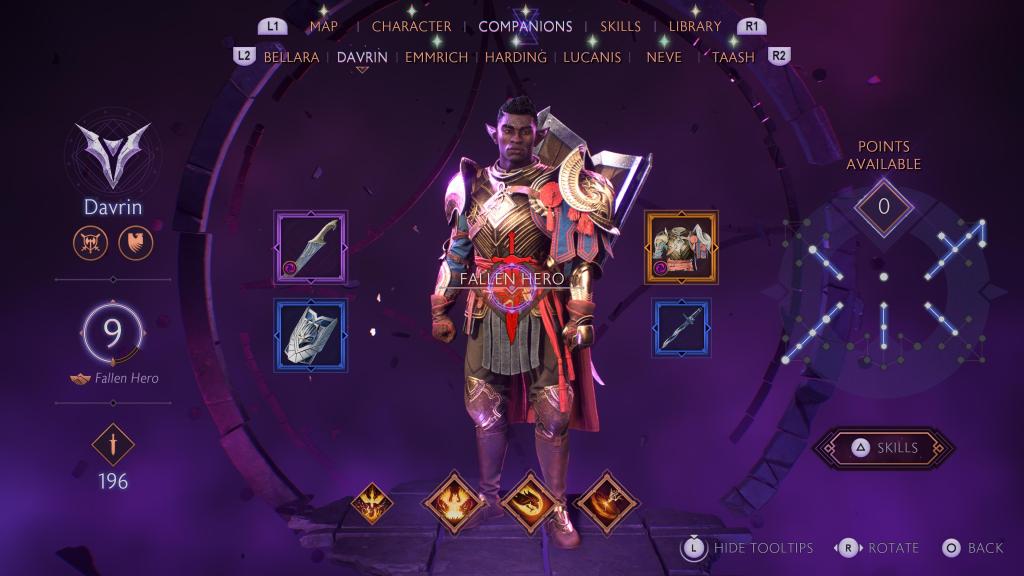
After all this, the game isn’t over. The characters don’t make their sacrifice and the team moves on after an obligatory “I feel bad” scene. No, the missing characters keep getting brought up, because they are actually mourned by the group. I really liked this, because these things happen later in the game, and friendships have been formed. The game forces Rook and the player to face their choices – not in a lecturing way, but in an “at what cost?” kind of way. I really liked how it was done.
As an aside, the game also handles survivor’s guilt very well.
I also liked that they returned to the choice-making system from the final battle in Mass Effect 2, where you need to choose the right people to lead the charge at certain points, and choosing wrong can result in death… sort of. They didn’t fully commit to this, as I think the only way a companion dies is if you don’t complete their personal quest, but other named characters who are associated with your companions (and who have been helping you) die if you don’t choose the right companion. I haven’t played with every possibility, but this is how it seems. So… again, it’s been a little sanitized. BUT I loved that mechanic in Mass Effect 2 and was stoked to see it here.
The Characters
I love them. I love each and every one of them and even when BioWare portrays relationships clumsily, it portrays relationships well. The characters felt real, they had their quirks, they had their security items that they carried everywhere (like Davrin’s wood carving and Lucanis’s coffee cup), and they wandered around the Lighthouse (the main base of operations for the group) so you sometimes had to actually look for them if you wanted to talk to them (or cheat and check the map, I suppose). I adored Bellara’s relationship with Neve, and – being the crazy person that I am – decided to see if BioWare had included the jealousy mechanic that Origins had by flirting with both of them. Spoiler alert: it doesn’t, and you can’t continue to flirt with anyone else one you commit to a relationship with one of the characters. This relates to one of my pet peeves about this game, which I’ll talk about more below.
I do wish that the characters had a little more to their relationships, but again, I’ve wanted this since Origins. I loved that, like in DAII or Inquisition, the Veilguard companion characters created friendships (or more) with each other, which made the world seem more real and the group seem like people who do, indeed, spend a lot of time together. I wished it had more opportunities to chat with the companions like in Origins, even though sometimes in Origins this meant I was suddenly and unexpectedly gossiping with Alistair while trying to escape imprisonment in our underwear. Most of my Warden’s bonding to the characters was via conversations at camp, and even though it was strange from an actual social skill standpoint, I did like that I could have some conversations over and over again, just because I liked the idea of my Warden talking to her companions.
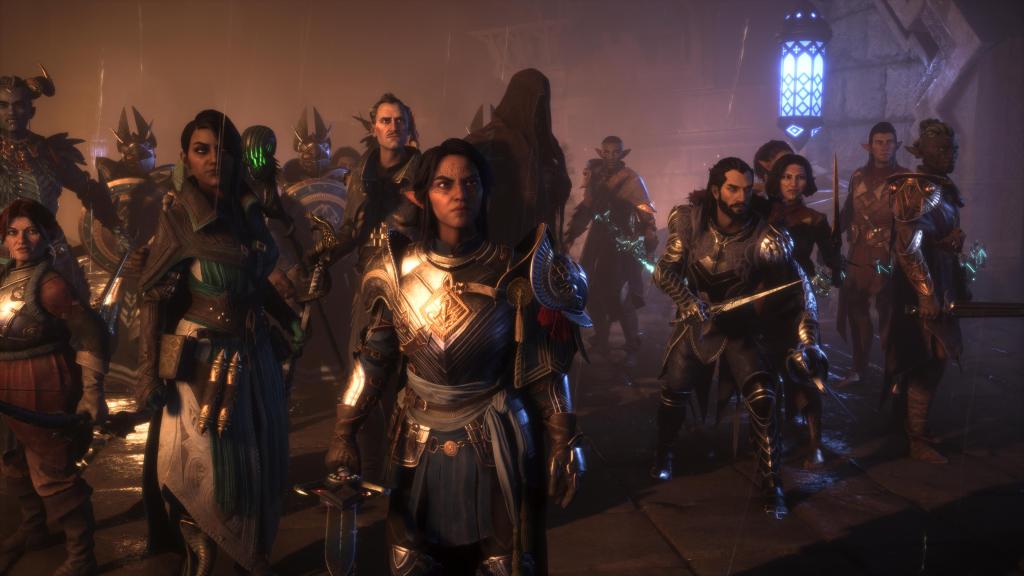
Some conversations only happened once, sure, but, for example, I would have liked if Neve, our resident Minrathous detective, had stories to tell about her cases, the same way Leliana (I’m so sorry I’m bringing her up again) has stories to tell because she is a bard. Or Bellara could have had so many options to talk about ancient elves and ancient elven magic, or Davrin about the Grey Wardens. There were so many chit-chat opportunities that I would have loved to see Dragon Age resurrect from their Origins era. So for me, the way the relationships were portrayed, they could have been fleshed out a little more and a little differently, especially since the core game is shorter than Origins was (as per HowLongToBeat).
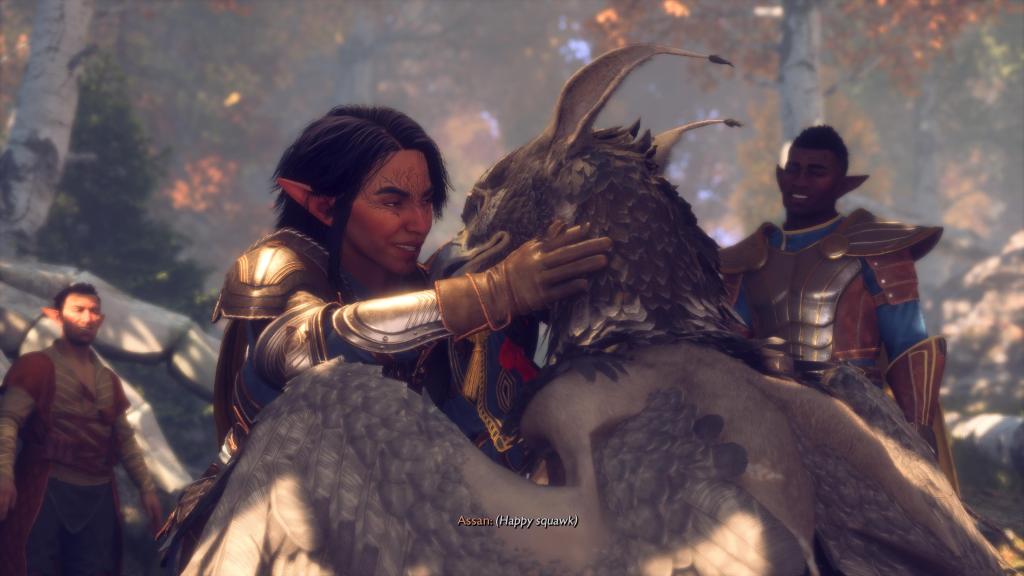
But, having said that, I loved the characters and was invested in them and their stories by the end. I adored Lucanis and his little coffee cup, and Asaan, and Manfred. I loved that the characters had lives outside of the Veilguard group, because it showed they were real people balancing a lot of responsibilities and personal stress on top of the world-ending responsibilities (even if the game took out a billboard on several occasions to be like DO THEIR PERSONAL QUESTS FIRST PLEASE AND THANK YOU, which was also a little jarring, and, again, maybe bad writing or maybe writing to a generation for whom media literacy is sometimes questionable – to be addressed in another post).
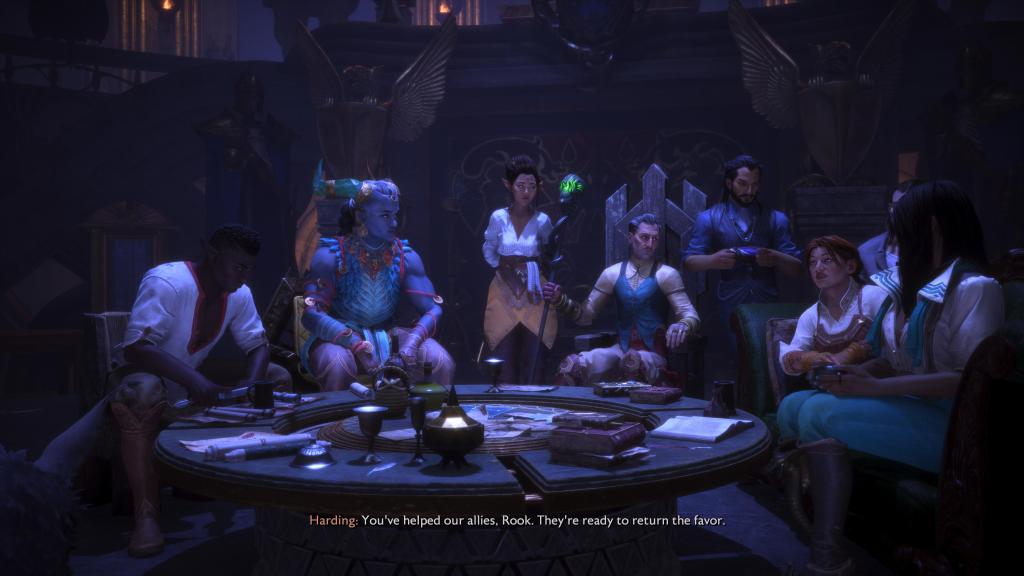
Not going to lie, though, now that I’m an adultier adult than when I played Origins, I better appreciate having to balance stupid personal stress with world-ending responsibilities, so that was nice to see in a game, too. And, not for nothing, I liked that the game wove together the world-ending urgency of Origins with the personal, small stories like DAII did.
The Summary
I’ve compared Veilguard to Origins several times in this post, and I think that stands out to me more than anything. It isn’t Origins, won’t take the place of Origins in my heart (or anyone else’s to judge from the Internet Hive Mind), but the gameplay and the story and the close-knit team fighting against incredible, ever-present odds (and, perhaps, the fact that I could play as a Grey Warden again) kept Origins close in my mind.
In Origins, the Blight was ever-present. Little by little, the game map was stained black as the country fell to the Blight, and in Veilguard, you can see the effect the blighted gods have even after the “fight” in that area is over. The team was thrown together out of necessity and because these were the folks you just picked up along the way and now hopefully all had a shared sense of duty. In Veilguard, the team was more curated like in Inquisition, but they were folks not united in an organization, rather just out of a shared sense of duty.
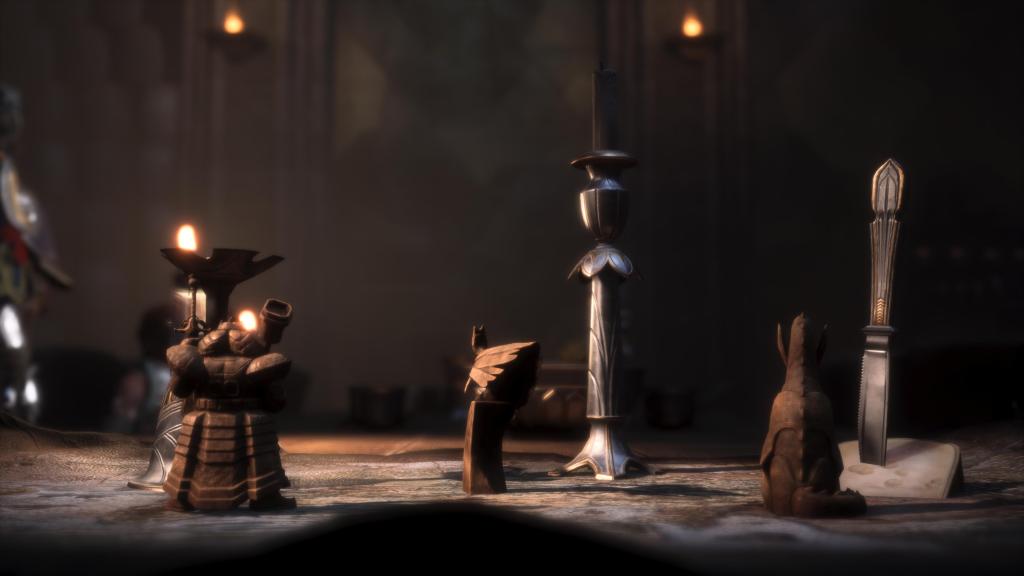
In Origins, there were parts that were downright creepy and horror-esque, and these parts crept back in to Veilguard, as well.
With so many pieces that, to me, hearken back to my favorite game of the series, it’s hard to dislike the game, but it’s also hard to totally ignore all the things that the game could have had. To me, this was the closest the series has come to recapturing that Origins feeling, except in the moments when it feels a little sanitized, like I mentioned.
The reason I think there will be no more Dragon Age games is because the game itself doesn’t seem to think there will be another Dragon Age game. The epilogue, which are known for having “ending cards” that explain what happened to the companions after the game ended, didn’t offer any insights or teasers as to “what came next.”
More importantly, the story that started in Origins has finally ended, with the main loose ends tied up to the point they could not be untied for another game. I don’t want to completely spoil the ending, but I don’t see a way for Dragon Age games to continue, unless they do some sort of reboot and place the games in a different Age, which would be fun, or contrive another conflict, which would not be fun.
Did I like it? Yes. Would I play it again?
Also yes.
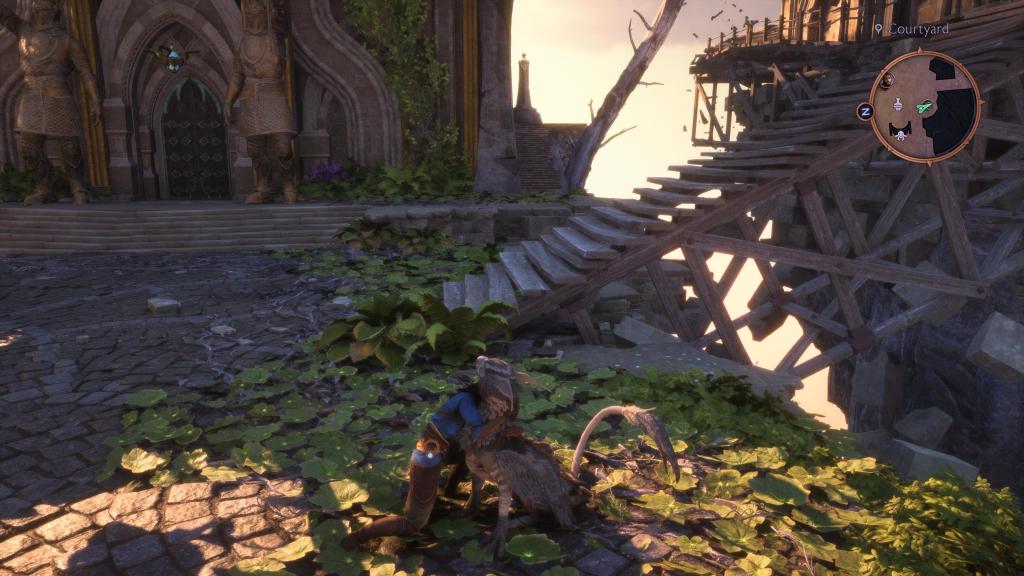
It has flaws. Some of them are glaring, and some of them just peek at you from time to time.
But I think it’s a good game that’s fun to play, and has a good story and engaging characters. I was very satisfied with the overall arc of the four Dragon Age games and definitely think that the story ended in a satisfying way at the end of Veilguard.
I’d recommend you play it for yourself if you have the time. If you do, come back and talk to me about it!
Have you ever played a game that didn’t fit into every expectation you had, disappointed you at points, but you still enjoyed? Do you think video game drama is ruining video games? Let me know in the comments!
Thanks for stopping by, and I’ll see you soon!
– Athena


Leave a Reply