


Ah, downloadable content and microtransactions. Two harbingers of modern gaming, aren’t they?

So I’m a little late to this party. A long time ago, Falcon Game Reviews wrote a fantastic article about all the things wrong with the way the gaming industry handles DLC and microtransactions, putting a number of aspects of modern gaming in his crosshairs. Likewise, iplayedthegame wrote a fantastic breakdown of some pretty pervasive issues with modern gaming, including the recent DLC and microtransaction culture that has gained steam recently.
Now that I have another great excuse to do chime in (*cough* Battlefront II, Shadow of War, Assassin’s Creed: Black Flag, Mass Effect: Andromeda *cough*), I thought I’d capitalize and ask you for two cents to give you my opinion. I mean, what?
The Cost of Gaming
Recently, Daniel from True Video Games has questioned whether or not video games are actually worth USD60, and even major news outlets have gotten in on the action, with organizations like CNN and Metro Gaming quoting analysts who think games should actually cost more than they already do.

Of course, I’ll be the first to admit that thoughts of microtransactions and DLC are complicated ones. I don’t think, however, that their existence is inherently evil, any more than I think that games automatically cause violence, or addiction, or any other problem. However, like with violence and addiction, how microtransactions and DLC are used can be tone-deaf at best, and harmful at worst. And unfortunately, they’ve been used very poorly as of late. Let’s take a look.
Unstoppable
Two common complaints about DLC and microtransactions is that they are everywhere, and developers have become greedy. I can definitely see the logic in those statements, especially seeing the prices of some in-game items, and certainly in the pay-to-win elements that just seem to tilt the scales in favor of those willing to drop real money, resulting in other people feeling left out.

It’s a very real possibility that DLC and microtransactions are not going away any time soon. That Pandora’s box has been opened, and unfortunately it let out all the potential good and bad that goes along with extra paid content. One one hand, DLC offers an opportunity for developers to add more story (and make a little more money) using a world that already exists and sell to a fanbase that also already exists. Most people were okay when these things were called “expansion packs,” because the game itself was whole and could stand without the pack.
So assuming that DLC and microtransactions aren’t going to completely go away anytime soon, let’s look at how DLC and microtransactions can be used poorly and actually hurt the industry, as well as a few ways they might be used in a way that is least intrusive to gamers.
Assuming Direct Control
Sometimes, discussions about DLC turn into folks being okay with them (rarely) or not. But they don’t have to be “all bad” or “all okay.” Stepping away from the sticky issue as to whether or not game publishers need to use DLC in order to reach their bottom line for a moment, I do think there are a few ways that DLC can be utilized that is the least infuriating.

The cardinal rule, if I might be so bold, of implementing DLC and microtransaction is that they should never be integral to the plot or overall game experience. My first introduction to DLC was, not surprisingly, through the Dragon Age series, and I thought those games (overall) handle DLC well. Dragon Age: Awakenings is a full expansion pack that, while it could be considered important “to the lore,” is far from necessary to play the game/series, and even ones that flirt with the line of “necessary,” like the Legacy DLC from Dragon Age II aren’t really integral to the plot. Horizon: Zero Dawn also does this well with its recent The Frozen Wilds DLC, which gives players more time with Aloy in a story that is tied to her world, but not (as I understand) to her main story. The Witcher III also does this, so it’s certainly possible.
One point that people might disagree on is the idea of paying for skins. While I’m personally a fan of being able to unlock special items through grinding and time investment (more on that in a minute), at its core I really don’t have a problem with someone wanting to pay $1.99 so a character can wear a purple dinosaur suit while punching Nazis. If that’s what you’re into, you go right ahead. I’ve heard arguments against this sort of DLC, but in the overall scheme of DLC usage, I don’t think this is incredibly harmful, with one important caveat.

This is my third and most important point. If DLC is going to be utilized for anything other than a stand-alone expansion, the items being purchased should also be able to be earned in-game if the player is willing to invest a little time (including that purple dinosaur suit). If I recall, Assassin’s Creed: Origins tried to do this, but having not played it for myself I’m not sure whether they did this well or not. At any rate, the “special” item should be earned through a time investment that’s not too inconvenient, but just inconvenient enough that maybe $1.99 isn’t quite so bad when you know it’s going to save you four hours of grind time.
This type of paying for convenience could be a powerful tool. And it doesn’t even need to be as intrusive as the example above. You have 22 inventory slots? Well, for $1 you can expand that to 35. Necessary? No. Is everyone going to pay for it? Nope. But will some? Sure. And you won’t upset the people who don’t pay for it, and they won’t feel like they’re “missing out” or being penalized for opting out.

One issue behind DLC that no one is talking about and yet everyone is touching on is that games need to be able to stand by themselves, without players being forced to shell out more money. If a game/publisher wants to add monetization to their game, that’s their business (literally), but it needs to be set up in a way that players won’t feel like they are being used to dispense cash. Maybe not all the “non-DLC-buying” gamers will purchase something, but that’s why the game needs to be able to self-sustain. We’ll talk about that a bit more later, but I think this is a nice place to begin discussing just how poorly the implementation of DLC and microtransactions will go.
Directing Personally
Like I mentioned above, having full expansion packs as DLC can be an enjoyable part of playing a game, especially if it give the player more time to spend in a world they love. I mentioned the Dragon Age and Mass Effect series, so I’m going to set my sights on them again. While there are instances that DLC expansions are innocuous, there are other times, like with the Tresspasser DLC from Dragon Age: Inquisition or the From Ashes DLC from Mass Effect 3 (especially the latter), that integral parts of the stories are locked behind glorified paywalls.
And of course, Mass Effect: Andromeda shipped a game with the intent to have DLC follow it, hinting at it in the gameplay, and then dropping support, meaning that the story will be unfinished and the game will be incomplete forever.
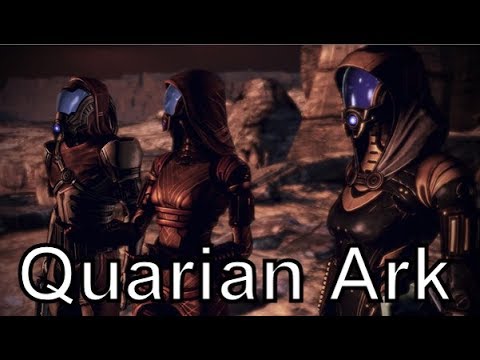
This is not how DLC should be used. Games should not ask players to pay full price for an incomplete game experience.

Day One DLC and Pre-Order DLC are other pet peeves of mine, for similar reasons. Games should never punish a player for not buying a new game when a commercial tells them to. If someone shells out the full price, they should get the full game. Buggy games being shipped with the intent to fix with Day One DLC* is outside the scope of this article, and is unfortunately a more complex issue than just being able to say “ship a full game.”.
Remember how I said that paying for convenience is okay? Well, it’s second cousin, paying for power, is not okay. I’ve heard arguments that say all powers and items should be able to be picked up via grinding, and I do agree with that, but it’s a very delicate balance between making something attainable through grinding, while also delicately balancing at what point it’s “okay” to charge for the convenience of not grinding. As a blanket statement, I’d say don’t do it, but of course if done well this can be harmless.*
Speaking of things to absolutely not do, this might be a good time to bring up lootboxes, those lovely little things that created such an uproar in recent months. I’m not sure why it took so long for people to become so upset about paying for an item before you see it. There are very few times IRL that we’ll shell out money while unsure whether we’re going to actually receive the product we want. Most of the time, we call that gambling.

And if there’s one thing we all need to accept about gambling, it’s that the house always wins. Of course publishers and developers might like lootboxes for just this reason, but cheating your customers while trying to convince them they’re actually getting something great is just underhanded. Additionally, definitely do not put lootboxes in games that will be played by minors. While I hesitate to throw around the term “illegal,” I would just like to remind everyone – in a completely unrelated statement – that minors are not legally allowed to gamble.

At the end of the day, DLC has the potential to exclude players – games are already expensive, even though some may claim they are the cheapest media entertainment available (spoiler alert: it’s not. Netflix blows games out of the water)*. Spending $60 on a game, only to be expected to shell out $20 more for an experience that probably won’t last for ⅓ of the play time of the original game is not fair to the gamers who can’t afford it.
This begins to get into another rant that is coming, about businesses making money to make games and businesses making games to make money, so that will be saved for another day.
End Because We Demand It
I mentioned before that games need to be able to self-sustain without the crutches of DLC and microtransactions. They did once, and, until recently, Nintendo showed us that shipping complete and quality games is still sustainable. But there’s one other issue that I want to mention, even though it’s far outside the scope of this article.
The players, and the culture. As Virtual Bastion mentioned a while ago, a certain culture has been carefully cultivated by game developers and publishers, so now we as a community expect more content to be released after the game is over. Let me say that again: we have come to expect it.

And so, can we blame publishers for always trying to push our boundaries? To test to see where we draw a firm line?
So when I ask, “Is there a solution?” it almost seems hyperbolic. In this culture that has been developed and nurtured by the people who create games, it seems like there is not way to convince enough people to stop buying DLC. I ran a recent Twitter poll, and at time of writing, most people seemed okay with some form of DLC or another. Maybe there isn’t a way to stop gamers from purchasing DLC, especially if it’s in a game or seires they love.
So is there a solution?

Well, yes. Of course there is. Moderation.
I mean that quite literally. We need to find a middle ground. To quote a favorite game of mine, “Shut one’s eyes tight or open one’s eyes wide, either way you are a fool.” And in this case, that’s true. Complete rejection and complete acceptance helps no one. But we can push back when publishers go too far. When we all speak together, they do hear us. They do change. We need to not be complacent, draw our lines, and defend them.
What do you think? Is DLC okay when used correctly? Where is your personal “line” for purchasing DLC/using microtransactions, or do you not pay to play? Let me know in the comments!
Thanks for stopping by, and I’ll see you soon,
~ Athena
**This article has some extra content available on Patreon**
But, like good DLC, it’s not integral to the plot. It’s just some extra goodies if you want to continue talking about this topic.
What’s next? You can like, subscribe, and support if you like what you’ve seen!
– Support us on Patreon, become a revered Aegis of AmbiGaming, and access extra content!
– Say hello on Facebook, Twitter, and even Google+!
– Check out our Let’s Plays if you’re really adventurous!


 Ambigamingcorner
Leave a comment