


This article is part of our Year of the RPG. You can read more about our Chrono Trigger adventures here.
It’s not every day that I have the distinct honor of playing “the best RPG ever.” After all, if a game is objectively the best of a particular category, then there can only be one game in that slot. The problem with any “best [thing] ever” is that, so often these pronouncements are a matter of taste, sometimes blurred by preference, experience, or time.
Chrono Trigger hails from an era when the people who sing its praises were children, or perhaps teenagers. So when I popped in the Playstation port of this game, I approached it cautiously, both wary of its hype and open to truly having the best gaming experience I’ve ever had.

Although I will touch upon names of characters, I won’t be talking too deeply about the story itself, so beware minor unmarked spoilers.

Time Travel
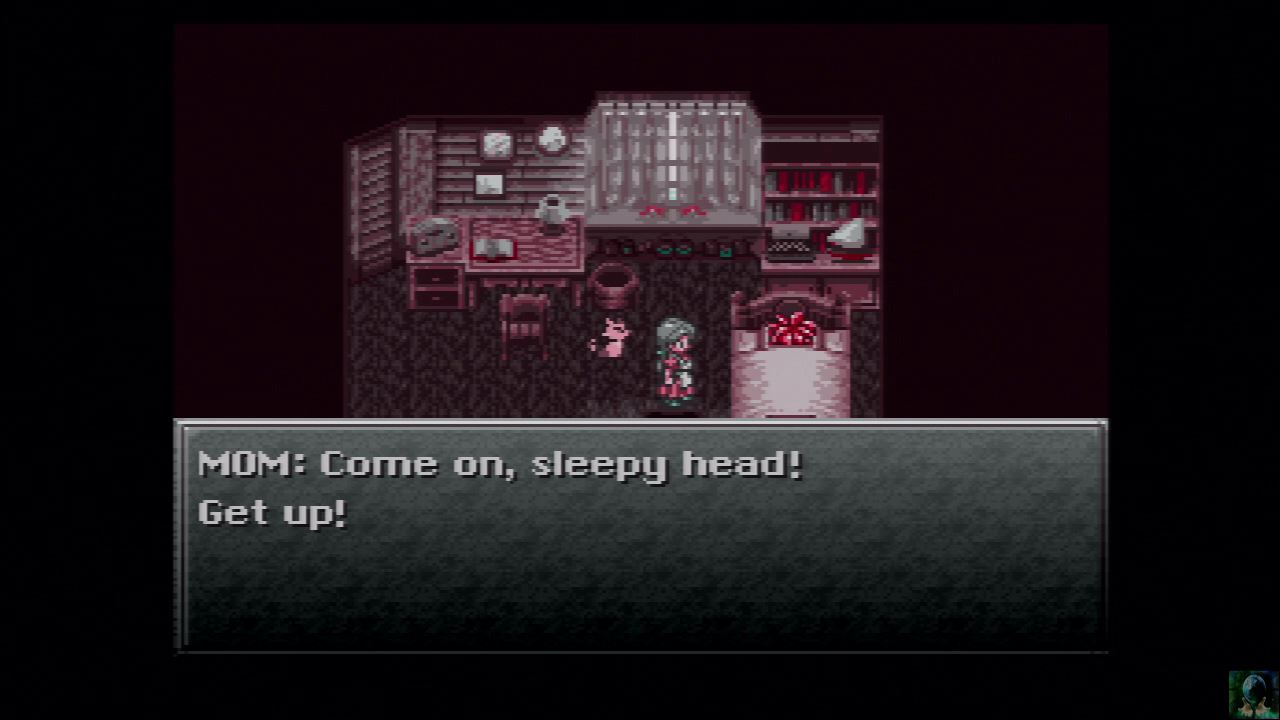
Let’s get something very easy out of the way first: Chrono Trigger is a good game. More interesting, however, is that the elements future computer/console RPGs borrowed or modified were very clear to find. What struck me first is that the titular Chrono (spelled “Crono” in game due to limits in the number of letters a name can have) begins the game by being woken up by his mother, who admonishes him about being late. I was immediately reminded of another character who travels through time and is known for sleeping late.
Game character comparisons aside, Chrono Trigger’s turn-based combat was intuitive and not nearly as intrusive as I was expecting it to be. From someone who isn’t really a turn-based aficionado (or fan), I found that the game introduced the mechanic well, never once assumed I knew what I was doing (which is a good assumption when playing with a new-to-you mechanic), and yet at the same time never treated me like I was too stupid to figure it out on my own.
At the beginning of the game, I was even given the option for enemies to “wait” before attacking to give me more time to sift through the different menus, as well, which I chose and found helpful, but also thought never impinged on the overall combat experience, either. And man, were some of those fights urgent.

As I’ve mentioned elsewhere, I’m not well-versed in Final Fantasy games, but I was a fan of Legend of Zelda (particularly Zelda II) growing up, so it was fun to see the overworld hub connecting the different areas Crono and his friends could explore pop up in this game. Unlike Zelda II, however, I never found myself hopelessly lost in the expansive world that spanned five (technically seven) time periods, although whether this is due to Chrono Trigger’s design or the age difference between when I played Zelda II and when I played Chrono Trigger, I’m not sure.
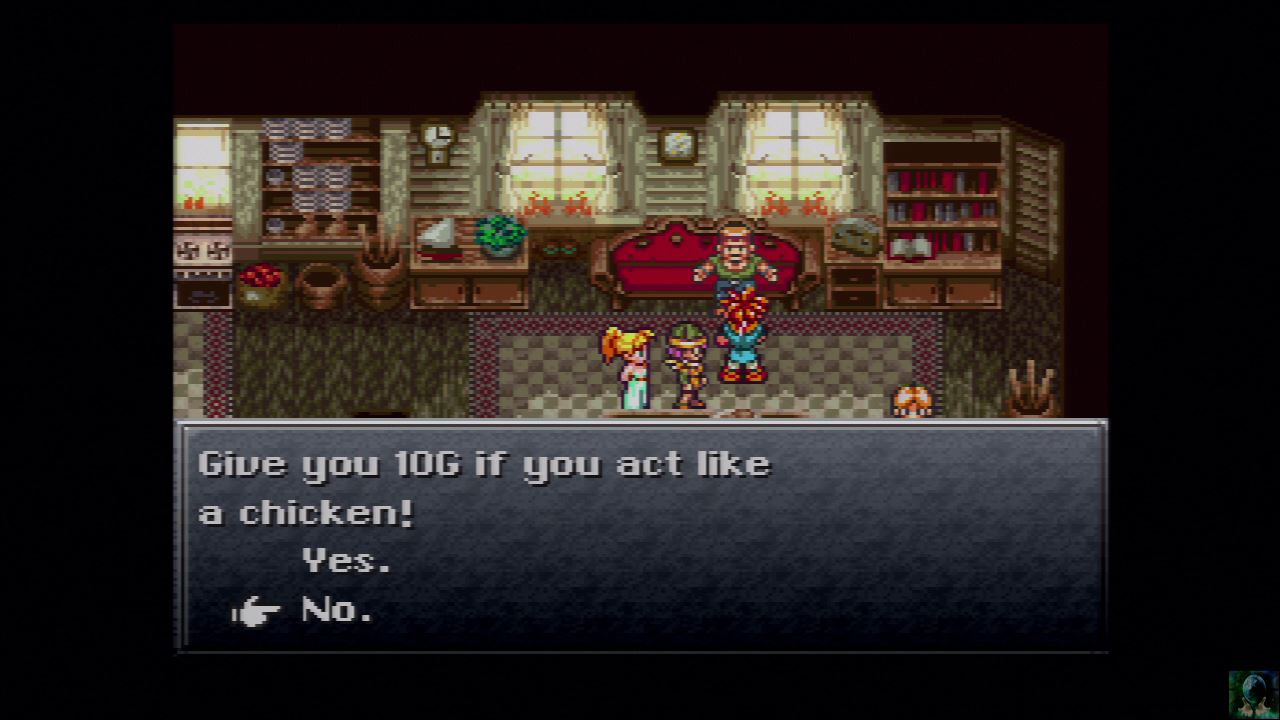
When it was released, Chrono Trigger was revolutionary in how it handled side quests and companion quests, insofar as it had them. I’ve read other reviews that have opined this game was the first to use NPCs for exposition and world building, but I don’t think that’s correct, even though it may be one of the first games to do this. I think it’s safe to say that talking to NPCs has become somewhat of a staple in video game RPGs since then. Either way, considering the huge maps and well-populated world, the important NPCs were easy to find and always happy to dump information on poor Crono and pals at the slightest provocation (or in return for a soda… or a chicken dance).
Making Friends and Influencing People
You guys know me, and so you know that I’m sort of a fan of good characters. Chrono Trigger does well in this department. While Crono is the silent type, and Marle is the shoe-horned love interest, I was never without compassion for any of the characters. Ayla and Lucca rocketed to the top of my favorite characters list, but I found myself moved by the plight of Robo and Magus, as well.
Frog and Marle likewise had moving, if not stereotypical, stories, and each character had their own moment to shine as their personal lives took center stage during their questlines. Interestingly, all of these quests shared a similar theme about who they are and where they fit in the world, finding their path, and making peace with their existence.

In keeping with this theme, the companions’ quests all seemed to build on one another, and there is a definite order that makes the most sense when trying to complete. I found it fascinating that the theme of time linking everyone together was utilized during the side missions, albeit was a loose association. But mostly, what I liked most about the characters was that they all seemed real. They had relationships with each other, they had their own motivations and stories, and no one – again, perhaps with the exception of Marle and Frog – were so deeply mired in archetype that they were not as interesting as the others.
Of course, one can’t talk about Chrono Trigger without mentioning time travel. This was a fascinating mechanic, and it was utilized in a way that made sense in the story and enhanced it instead of encumbered it. The idea of traveling through time and manipulating small events (or large events) and then letting the butterfly effect take care of the future is a familiar yet well-executed plot device, and more often than not I found myself wondering if this instance is one that requires me to go back in time, and if so, what would I need to do? I haven’t played many time-travel games, but I’ve also never played any other game (with the exception perhaps of some Portal – that really has me thinking in plot mechanics.

However, Chrono Trigger does conceptualize time as a straight line that one can travel back and forth across, which I have a personal issue with. This is impossible, because it creates a paradox simply by its existence; the events would have to have happened and not happened at the same time. Although this begins to point to some of the questions about the nature of reality and time in Chrono Trigger, which is a discussion for another day.
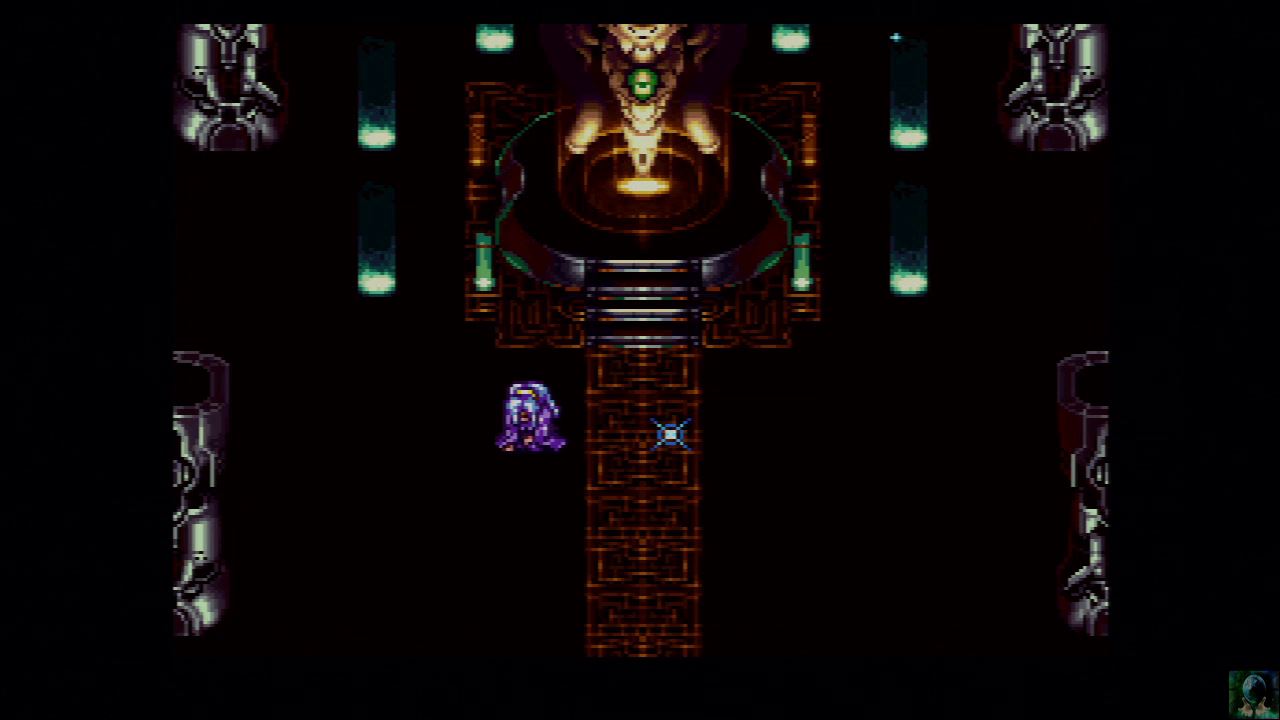
Unfortunately, the story itself didn’t really grip me as much as I thought it would. As was mentioned, it was an interesting concept and was executed well, but the story itself was fairly straightforward: bad guy invades, hero has to stop it by traveling through time. To my eye, the one aspect that made the story unique was the inclusion of Schala and the dynamic with Magus, so I would have personally liked to have seen that emphasized a little more. I realize that I have played a number of RPGs even before the Year of the RPG started, but it just seemed like they missed a really interesting storytelling opportunity there.
On the other hand, I also played this game in 2018, well after its release and after being bombarded with reports of it being the “best game ever” and seeing it at the top of Top 100 lists consistently. I think its hype got the better of me, and I was looking for a much more profound story from a “best game ever.”
To be fair, there were many times that I sat there saying, “No way… no way…” but upon reflection for this article, I realized those reactions had to do with seeing certain types of symbolism show up unexpectedly (read; surprise it was in a video game), not from the actual game itself. The remedy for this, in my mind, is tempering hype.

Rose Colored PrismSpecs
It’s hard for me to comment on this game, because I found myself tearing myself into two time periods even as Crono and friends hopped around between the distant past and the far-flung future. One part of me played it in 2018. That part of me found Chrono Trigger to be a very good game, and one I enjoyed.
The characters were fun to get to know, and the story was interesting, even though the parts I was most interested in (what happened to Schala?) never came to fruition. In the present, I appreciated seeing the origins of what have become “traditional” console RPG elements, like the dungeon escape scenes, heavy NPC involvement, side quests, three-dimensional companion characters, and vast world maps.
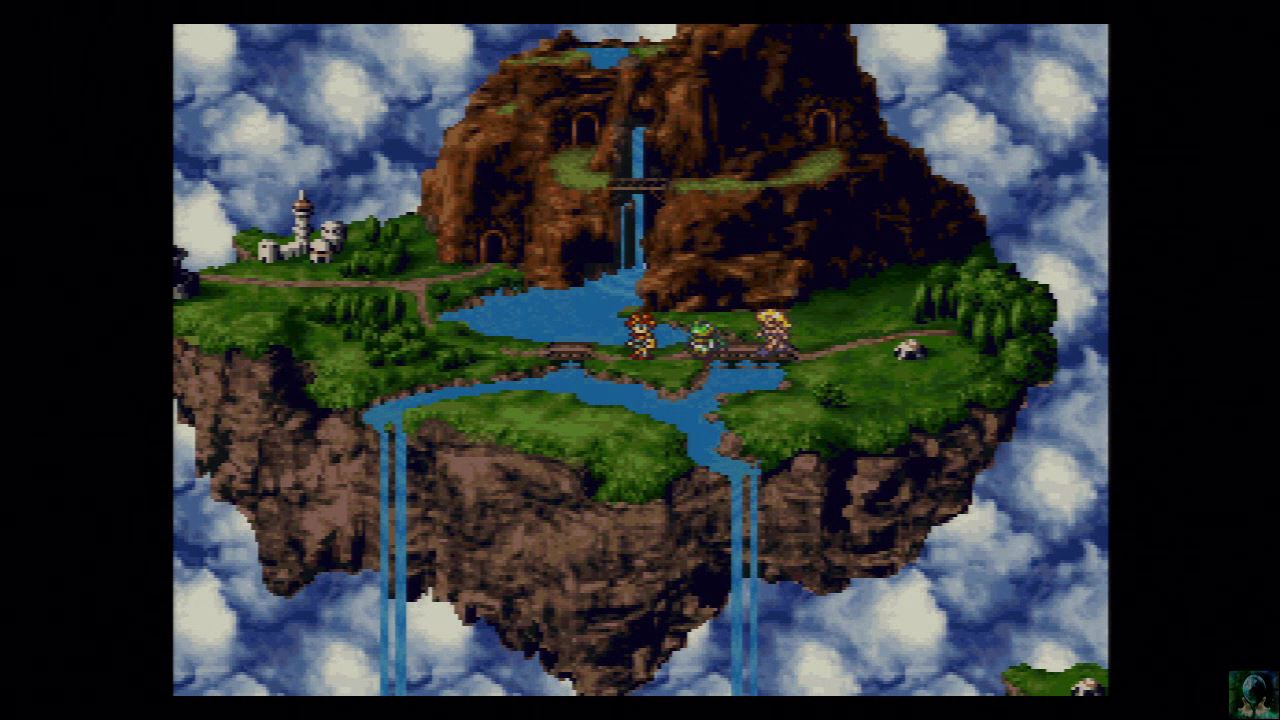
The other part of me was trying to play this game back in the era of Super Nintendo, and that part of me had quite a bit more fun. It was amazing to see fully-animated cutscenes that were then echoed in the 16-bit graphics, and the sheer level of detail in such an expansive game that was all stored on a (relatively) small Super Nintendo cartridge. Again to my untrained eye, Chrono Trigger pushed the envelope for computer RPGs, having a deep story, three-dimensional characters, and implementing a number of RPG characteristics that subsequent games utilized and expanded upon.

The tough question for me is, Does it live up to its hype? If the hype is “the best game ever,” then the answer is no. I’ve played games with good stories, challenging but well-balanced combat, and interesting characters, and I can’t look at Chrono Trigger and say that it’s better than every single one of them in every way imaginable.
But is it a really good – even great – game? Yes, I think so.
If you’re wondering whether to play it or not, should you? Absolutely yes.
Does it have replay value to get all the endings? I usually only replay games because I am intrigued by the story, so this isn’t something I would do, but there is plenty to go back and explore.
Do I recommend it? Unhesitatingly yes.
Don’t fret! We’re not done with Chrono Trigger yet! We’ll be exploring more of its symbolism in future posts.
Have you played Chrono Trigger? What did you like best about it? Does it live up to its hype? Who was your favorite character? Let me know in the comments!
Thanks for stopping by, and I’ll see you soon!
~Athena
What’s next? You can like, subscribe, and support if you like what you’ve seen!
– Support us on Patreon, become a revered Aegis of AmbiGaming, and access extra content!
– Say hello on Facebook, Twitter, and even Google+!
– Check out our Let’s Plays if you’re really adventurous!


 Ambigamingcorner
Leave a reply to vgxtpod Cancel reply