


I recently (finally) acquired a PS4 and picked up a few games to go with it. Most of my hesitation was around playing Destiny, due to some massive first-person sickness in the past. But I wanted to try again, drawn in by the promise of interesting lore.
After I stopped feeling nauseous (sigh), I pulled up a Let’s Play. And then I pulled up another Let’s Play, since the guy’s voice was sort of annoying (sorry). And then I pulled up another one, because the second guy was VERY ENTHUSIASTIC ABOUT EVERYTHING. And then I pulled up another one. And then I noticed a pattern, so I pulled up yet another one, and another, and another.
All the players were male.
Yes, we are going to talk about gender and video games in this first of a few posts that will be taking on this rather touchy subject.

What struck me as interesting was that I went through an entire page of YouTube videos and not one Let’s Player was a woman (with the possible exception of the one video that didn’t have any commentary at all).
Compare this to the first page of Portal Let’s Plays, which has two different playthroughs narrated by women.
This doesn’t seem like an important issue. After all, I hear you say, everyone should be entitled to play the video games they want to play regardless of gender. Well, intelligent reader, you are absolutely right and I agree with you completely. So why talk about this at all?
Snips and Snails and Puppy-Dog Tails
Let’s do an experiment. Think of a first-person game where the main character has a gun. Got the name? Now think of the person behind the screen playing the game.

I bet you all thought of Portal and a 35-year-old woman with children, right? Let’s try a different one.
Think of a match-three game. Thought of one? Now, again, think of the gender of the players happily matching three “whatevers” of the game.
Well, now you’re on to me, so I bet you thought of Puzzle Quest and men.

All cheekiness aside, the point I’m trying to make is that we as a gaming community often mistake gaming mechanics for gaming themes or, worse, we lump them together as the same thing. By doing this, we may actually be limiting ourselves to the types of games that we play, at the very least. At the most (and worst), we as a community are limiting the types of games we develop.
Mechanics, Themes, and Cooties
A lot of the above paragraph needs to be unpacked and expanded a little more, so let’s start with some definition. Game mechanics are the constructs by which players can interact with the game. They are, simply, the rules of the game, and dictate whether the camera is in first- or third-person, how the character can move and interact with the environment, whether the game is card-based or uses a dice roll, and other matters pertaining to the core build of the game. Usually, the game mechanics are used to define the type or genre of game, such as a first-person shooter, adventure, turn-based, or platformer.
Themes in a video game are, by contrast, the elements that convey what the game is about, including graphics style, type of gameplay, what the main character looks like, the music, etc. This relates to theming, which refers to the use of themes to create a cohesive experience .

From these definitions, it’s easy to see how a mechanic does not lend itself primarily to one gender or another, but a theme can lend itself a great deal to one gender or another. So when first-person shooter Call of Duty sells primarily to men, and match-three Candy Crush is enjoyed predominantly by women, we assume that the reason is because boys like first-person shooters and girls like match-three.
Let’s look back at the examples above. Portal was, for all intents and purposes, a first-person shooter insofar as the game was in first-person perspective and utilized a gun for the entirety of the game. But Portal didn’t appeal solely (or primarily) to males. This is because the theme of the game was not specifically gendered the way Call of Duty‘s machismo gamestyle is gendered.


Puzzle Quest, on the other hand, is a match-three game, but takes place in the Warlords universe in a fantastically-conceived “RPG meets Bejeweled” way. Even though match-three games are generally considered “girl games,” Puzzle Quest had a strong male following, because the theme of it was not gendered (or gendered in a way that was more acceptable to men/both genders).
Men Are From Omega, Women Are From Illium
While I’m willing to agree that men and women – on average – have different preferences in regards to video game themes, both genders can appreciate a mechanic. Wichita State University published a research article that suggests more males prefer violent video game themes than women, and women prefer games with more social or puzzle elements themes. So far, so fair. But without a plethora of first-person games that aren’t themed toward male-preferred themes, it is hard to conclude whether women would like first-person shooters that appealed more toward their preferred themes, as was the case with Portal. So we are left to guess whether it is the theme or the mechanic that separates genders.
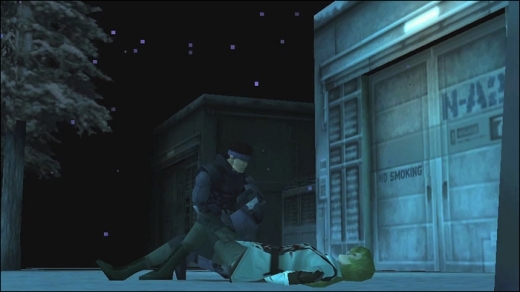
Anecdotally, I think theming is the culprit, because games that have deep stories and engaging characters are popular with women, even if they include violent elements. Games in the Dragon Age or Mass Effect or Final Fantasy franchises, which do include violence as a part of the game but have a stronger focus on story and characters, have a strong female following. More personally, I love the Metal Gear games, which include violent aspects, but the characters and the story add a perspective to the shooting that I like to have.
Further support for this hypothesis is that mechanics that are not themed toward one gender or another are popular across genders, like adventure and racing games. Everyone can appreciate driving a fast car around a track and coming in first place or exploring a new world!
The Bottom Line
At the end of the day, the industry can develop games however they see fit. Developers can continue to program first-person shooter games with themes that appeal primarily to male gamers, and ignore the untapped audience that doesn’t like the violence or overtly-masculine themes of the games that are produced. They can develop puzzle-games that appeal to women, and ignore the other half of gamers who aren’t drawn in by the enjoyment of solving a puzzle for the puzzle’s sake. Worse, they are missing out on audiences – and therefore revenue – by limiting certain mechanics to certain themes, and we as players are missing out on experiencing certain “types” of games (read: game mechanics) because the themes don’t appeal to one gender or another.
What do you think? Are game mechanics gendered? Do you think women and men inherently like different mechanics, or are themes to blame? Is this not an issue at all? Let me know in the comments!
Thanks for stopping by, and I’ll see you soon!
~ Athena
PS I realize that these are sweeping stereotypes, and there are plenty of women who love Call of Duty and Halo and other predominantly “male” games. Plenty of men love a good game of Candy Crush, too. I personally enjoy games in the Grant Theft Auto franchise, which, as far as violence and other hedonistic debauchery go, is king. This is not to say that men or women only like one type of theme or another, just that the tendency toward certain themes is real and needs to be talked about.
What’s next? You can like and subscribe if you like what you’ve seen!
You can also:
– Support us on Patreon, become a revered Aegis of AmbiGaming, and access extra content!
– Say hello on Facebook, Twitter, and even Google+!
– Check out our Let’s Plays if you’re really adventurous!



 Ambigamingcorner
Leave a reply to hundstrasse Cancel reply