


We’ve all fallen victim to hype at one time or another: that incredible excitement for a highly anticipated game (or movie or book) that at the time seems reasonable, but utterly ridiculous after the moment had passed. One thing we can all thank No Man’s Sky for is for giving the game community the slap it needed to break the spell of that terrible game-killer, hype.
But are we rid of it? Why, when we know its potential for disaster, do we believe and get wrapped up in the hype surrounding an upcoming game?
It wouldn’t be a Wednesday post without some definitions, so let’s take a look at what hype actually is.
Hype, Boredom, and the Subconscious
Hype is a word that refers to promotion or propaganda, meant to raise interest and excitement in a person or product. Often, this is a word used especially to refer to exaggerated claims used for this purpose.
The key word is exaggerated. Perhaps a better word would be sensational or novel. This is the part of hype that sucks us in if we’re not ready for it, and what built up all the hopefuls prior to the release of No Man’s Sky. It’s also what we must acclimate to in order to see through the haze of hype to make a calm – and hopefully more objective – judgment about something.
Our brains are wired to take note of and process everyday familiar stimuli without us becoming overwhelmed (that is, we process it subconsciously). These types of familiar stimuli are, in a way, boring to us. They are expected and normal. But our ability to consciously ignore – while subconsciously processing – mundane information is actually an important survival skill.
Imagine driving on a highway. In order to operate a car, you must monitor your speed, check whether you are staying in the lane, make minute adjustments of the steering wheel as needed, check your mirrors, note any cars around you, respond to their movements, merge lanes, and navigate to your destination. Chances are, you do all these things (and more) without a thought. If you’ve ever wondered why you can drive for an hour to a familiar destination and have no memory of your journey, it’s because everything you had to process was so familiar and “boring” that you were quite literally unaware of it – at least consciously.
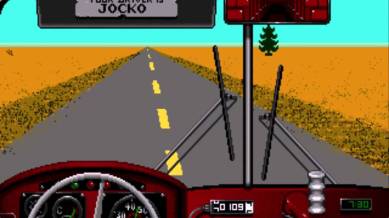
Although it seems counterintuitive, this phenomenon actually makes you better able to respond to new stimuli (assuming you’re not truly nodding off). For instance, say you are driving down the highway again, contentedly not consciously aware of the pressure of your foot on the accelerator. Suddenly, a tractor trailer careens over the median onto your side of the highway. Just as suddenly, your attention is grabbed by this new and unexpected event, and, to your brain, you have only one stimulus to respond to… even though you are still completing all necessary tasks to operate your car.
Novel stimuli naturally need more processing power, as our brains need to figure out what the stimulus is and what it means in relation to us/our survival/our needs and wants. And so, the new stimulus (the truck) is responded to/processed consciously because your conscious brain isn’t burdened with sorting through the other familiar tasks that you are performing on “auto-pilot.”
So, these conscious tasks require more processing power, which require your attention. To a game developer, more attention can translate into greater profits.
Jumping on Board
With a basic understanding of how our brain prioritizes incoming stimuli, we can turn back to the phenomenon of hype. As defined above, hype is meant to be sensational information in order to promote a product. Hype is used to show how the product is exciting and novel. In other words, it’s the careening truck on our boring drive.

Now think of video game announcements. They are made to dazzle you with new and better graphics, or with the promise of a new story in a universe that already elicits positive feelings, or even with a teasing promise of a new, never-before-seen game or concept. And our brains pay a little more attention to these “new” concepts because, well, they’re new and our brains need extra time to process.
Little hints, small news articles, and new pictures are released like the steady drip of a faucet. With the extra attention these leaks get because they are providing new information, our brain then starts to try and make sense of all the disjointed pieces its receiving, demanding more information – more drips – when it fails to create a cohesive picture.
And around and around it goes.

In bad cases, we draw the wrong conclusions either because we are purposefully led in a direction, or because no game or book or movie could ever live up to what each of us can conjure in our minds. In the best cases, the game is great and we ride off into a digital sunset on a magical dragon (or other transportation of choice).
Just kidding. In the best cases, we are given a solid game that we enjoy playing, not because of the hype, but because it’s a good game and we would have liked it anyway.
…But we fall for it – a lot, and we fell for it until No Man’s Sky came along and showed us how badly sensationalism can hurt a game. We were given tantalizing information, which spurned fans to greater, dizzying heights, and the developers promised more and more, which all culminated in a decent game being released, but by no means the amazing life-changing event it was hyped to be.
But wait. What would prompt a developer to feel pressed to exaggerate (or outright lie) when they must certainly know they would eventually be caught?
Living in a Hype Culture World
We live in a world full of hype. Often, people comment on how the news sensationalizes stories. A few (real) examples (I swear these are real):
“High heel defense! Tonight, at 11.”
“The dramatic details leading up to this horrific breakup, later tonight!”
“The Digital Breakup!”
“It could be affecting you. Digital Amnesia!”
“Digital Drowning!”
“Dry Drowning! Coming up next on (insert news channel)”
“Water Overdose!”

The media has learned that to grab attention and viewers, and therefore ratings, it needs to create hype around its stories. So it taps into our desire for new and exciting, and teases us with only a little bit of information. And we fall for it for a time, but then we learn. That level of hype becomes “normal,” and expected. It no longer grabs our attention.
So the next time they want our attention, the hype needs to be bigger, more exciting, and more promising of something even better and newer. Then we wind up with a situation like with No Man’s Sky. To outshine other games, I suspect the developers over-promised, wrapped up in the pageantry of promotion, vying for our attention as we were bombarded from every side with “new.” After all, a first-person flight simulator falls a little flat next to the sweeping landscapes and story of a game like The Witcher III.

Hyping and Hating
Of course, if we’re going to talk about hype, we’re also going to briefly mention hate. I’m sure you all were aware of the online storm after No Man’s Sky was released and failed to deliver on what fans were expecting, and have watched the recent anger toward the cancellation of Scalebound for Xbox. Like love and hate, hype and hate coexist with a fine, fine line separating them.

Let’s sit on that one for a moment.
…
……
Now imagine that where she says, “I love you,” she’s talking about an upcoming video game she was incredibly, exceedingly excited for but had ultimately disappointed her.
Hype and hate: when we allow ourselves to feel so strongly about something that we, in a way, become unhinged. We become blinded to what’s really in front of us in favor of unrealistic expectations.
Final Thoughts
Maybe we all bear a little bit of the blame: the publishers, media, or other providers who want our attention, and us, for getting wrapped up in the showmanship and the emotion of it all. A backlash against this, of course, could result in apathy, but that is far beyond the scope of this article. The takeaway message, however, is that, when faced with hype (or its darker cousin, hate), be it for a release of a game or a console or a movie, or the election of a politician, or the cancellation of an anticipated game, we need to realize what’s happening in order to safely combat it and dig down to where the facts lie. Beneath the emotions. Because when the hype train crashes, you don’t want to be on it.
What do you think? Does hype serve a purpose? Does it have a place in the games industry? What about in the physical world? Let me know in the comments!
Thanks for stopping by, and I’ll see you soon!
~Athena
PS I can already hear keyboards clicking, but please note that being excited for a game and being wrapped up in hype are two different things (or at the very least are at different places on that spectrum of feelings). Excitement for a game is looking forward to it. Hype is holding a game to an unrealistic standard. Just to be clear!
What’s next? You can like, subscribe, and support if you like what you’ve seen!
– Support us on Patreon, become a revered Aegis of AmbiGaming, and access extra content!
– Say hello on Facebook, Twitter, and even Google+!
– Check out our Let’s Plays if you’re really adventurous!


 Ambigamingcorner
Leave a reply to The Interesting Case of The New Galaxy: What We Learn from Mass Effect: Andromeda – AmbiGaming Cancel reply