


When talking about good characters in any medium, there are many different aspects that come into play to create a living, breathing experience for the audience. This is not different for games, and while I could talk about characters all day, it seems like a disservice to take only small aspects of characters and present them one at a time. For instance, we’ve talked before about the importance of having a good avatar in a game, had lively discussions about representation in our avatars and NPCs, and even dabbled in how games can help us explore experiences outside of ourselves from time to time by giving us a main character or avatar that is outside what is typically expected in a game.

But what are avatars, really? Are they different from characters? And, if they are, do these differences influence how we play?
Avatars and Characters
An avatar is the physical representation/manifestation of the player in the game-world. This sort of identification “as” a character means that you are inserting yourself into the blanks left by the writiers. The avatar embodies the way you want to be seen in the game-world either physically, mentally, or both, and lets the player interact with the world in a way that is meaningful and personal, because the avatar – in this case – is the player. And avatar is, for all intents and purposes, a new skin players walk around in within the game’s world.
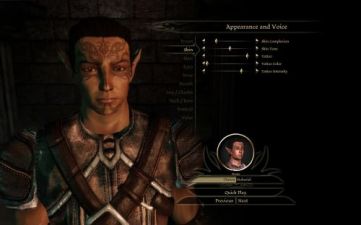
A character, on the other hand, is a tool for the player to use within the game to manipulate the game’s world. When identifying “with” a character in this way, the player is given a developed character and asked to empathize with him/her. Even if a game has RPG elements, like in The Witcher 3 or the Mass Effect series, and allows the players a certain amount of flexibility in how the character develops, at the end of the day the character has a fairly pre-determined personality. A character, by this definition, is an aesthetically pleasing cursor, used as a tool to interact with the game.

However, the lines between these two can be blurred, and at times players can subconsciously choose whether a person in a game is a character or an avatar, based on their goals as a player and what they want to get out of their experience, which we’ll talk a little more about below.
Established Characters
When playing as an established character, the player is essentially stepping into someone else’s story and walking around in it for a while. The character has a personality, but it usually doesn’t manifest during the actual gameplay. Examples of this would be Solid Snake from the Metal Gear Solid series, or Cloud from Final Fantasy VII. Both have distinct personalities, but those personalities don’t matter during actual gameplay. In these instances, they are aesthetically-pleasing cursors, used as a tool with which the player interacts with the game world.
However, some characters, like Geralt from The Witcher series, Commander Shepard from Mass Effect, and Hawke or the Inquisitor from Dragon Age would be partly established characters, but also begin to fill the role of avatars.

They have fairly established characters, backstories, etc., but building their personality is part of gameplay, and their personality affects the game. This begins to give the player more autonomy within the fictional world, and therefore better enables the player to insert him or herself into the world, rather than simply using the character as a tool.
“Blank Slate” or Build-Your-Own Avatars
The examples of Shepard, Hawke, and Geralt are examples that begin to blur the line between a character and an avatar. So, an avatar – or “blank slate character,” lets players put themselves – or a certain iteration of themselves – into a video game.
This is where things become interesting. While players can certainly role-play a game as themselves, players can also experiment with different personalities and characteristics. They can accentuate a strength or a flaw, change their appearance and background, and literally “get into” another person’s skin and walk around in it for a while.

The avatar, though, is you, or how you want to be seen in the game world. This is easily exemplified in an online game like World of Warcraft, where your avatar is a visual representation of you, much like your physical form in the physical world is a visual representation of you, but this could be applied to any game that allowed you to build a character in your own image, or one that allows you to fully project yourself onto him/her.
Another Person’s Shoes
Playing as either one of these types of characters can allow players to experiment with different genders and experiences… After all, when else can you be a man pretending to be a woman, while flirting with men who are played by women? In the case of an avatar, it may encourage the player to truly role-play as that type of person, or, in the case of online games, may result in them being treated differently based on their appearance. If, however, a person decides to play as an established character, the player will naturally be looking at the world from that character’s perspective, due to the wonderful power of empathy.

By playing as a character different from yourself, gamers can experience a bit of another person’s life. As we’ve talked about before, our brains don’t differentiate between real and virtual experiences – if we experience or learn something within a game, our brain will generally treat it like it was experienced or learned outside of a game. and increase your empathy. After all, a woman playing as Solid Snake will have a slightly different experience than a man playing as the same character, and vice versa for a character like Bayonetta. The more types of characters you experience, the more insight into them you may have, and the more empathetic you may become to their way of existence.
Only if you’re aware of it, though.
Enter the Avatar: Tactical Maneuvers
Why might people choose to experience the game through the eyes of a different type of person, though? It comes down to what you want out of the game: do you primarily strive for experiences, or achievements?

If you look for new experiences in a video game (even if it’s only sometimes), then the above portion of this article applies to you. It’s possible that you as a player are interested in experiencing what people not like you experience, and so – when given the option – may choose to play as a character of a different race, gender, or even species, just to experience the world through someone else’s eyes.
But playing as someone not like you can be tactical, as well. This means that the player has put a great distance between themselves and the character on the screen. The character/avatar is nothing more than a pretty cursor and a stats screen. While the player experiences the game world through the character/avatar’s eyes – the player is limited by what the character can do in the game world/how responsive the character is to the buttons on the controller – and the player is limited to interacting with the game world by using the avatar, at the end of the day, the character/avatar is used simply for tactical purposes.
For instance, a man may choose to play as a female character in an online game in order to encourage people to be nicer to them and help them (in an MMO). In an online shooter, a man might play as a woman because people (still) don’t always expect women to be good at playing video games, and so “being a woman” might give them an element of surprise. Likewise, a woman may play as a man in order to reap the benefits of being seen as a man in an online community. They may be taken more seriously, or be left alone more.

Another, less socially-charged, example of picking a character would be choosing a fighter in a tournament. For instance, a man might play as Chun-Li, not because he wants to experience a game as a woman, but because he thinks she has powerful combos or anticipates another tactical benefit. In all these instances, the players are more focused on tactical aspects of their characters/avatars, rather than the personal, emotional, or empathetic experience they will have from playing a game.

Cursor or Character?
Both of these experiences are valid, and at some point or another, most gamers have probably played a game using an avatar in addition to playing a game(s) that have an established character as the playable character. Of course, tactical usage is nice, and knowing when to choose which character can have fantastic in-game benefits. Being aware of when you are projecting onto a character and when you are – for the most part – using the character as a tool to interact with the world can also result in powerful gaming experiences, and increase a player’s capacity to relate to another person after experiencing the world through their eyes.
Have you ever felt like you were one of your avatars in a game? Did it force you to think critically about anything? Or do you prefer a little more distance between you and your characters? Let me know in the comments!
Thanks for stopping by, and I’ll see you soon!
~ Athena
**This article has some extra content available over at Patreon, if you are so inclined!**
What’s next? You can like and subscribe if you like what you’ve seen!
You can also:
– Support us on Patreon, become a revered Aegis of AmbiGaming, and access extra content!
– Say hello on Facebook, Twitter, and even Google+!
– Check out our Let’s Plays if you’re really adventurous!


 Ambigamingcorner
Leave a reply to Athena | AmbiGaming Cancel reply