

Compared to other mediums, video games are still fairly new to the “entertainment medium” party. However, storytelling has existed since humans were able to communicate ideas to each other, so there are a few tried-and-true ways to convey a story effectively. Let’s talk about exposition in games: how its done, when it works, and when it really, really doesn’t.
One of the most important aspects of storytelling is the idea of “show, don’t tell.” Don’t tell the reader why they care about a character; show them the reasons the character is a great person and worthy of their emotional investment. This is done through exposition or narrative, which consists of details of the story that aren’t really pertinent to the main plot, but are overall important for character development, perspective, etc. These are the details like, “Joe was in a wheelchair. He had been in the war, and an explosive device mangled his legs. A number of his combat buddies died that day, and he was still upset about it, so he didn’t spend much time at home.” There, I told you.
That’s pretty boring.

Instead, you might show the information thus:
Joe sat at his usual table at the restaurant downtown. His cell phone rang, but he ignored it, knowing it was his wife wondering where he had gone this time. The waitress hadn’t commented on all the empty chairs around the table set for six, he noted. She was new; she didn’t know the faces that should have been here. With a gusty sigh, Joe locked the wheels of his chair. His hand found the scars on his leg where shrapnel had buried itself in a flash of burning and pain, before he forced himself to open his menu alone.
I conveyed the same information as the “tell” sentence, but never actually stated that his friends were dead, or that Joe had been a soldier, or that there had been an explosion, but I’m sure you were able to draw those conclusions for yourself.
Brief Sidetrack
As a side note, in an interactive medium like a video game, I would argue that it’s more important to “do, don’t show,” but that discussion is for another post entirely. Suffice it to say that in my mind, the video game storytelling hierarchy looks something like this:
DOING > SHOWING > TELLING
Back on Track and Back to the Games
Exposition in video games is used to convey details about the (usually unfamiliar) world the player will be inhabiting for the next twenty to one hundred hours. Because of their interactive nature, the games cannot rely on dialogue to illustrate every point, otherwise the game quickly becomes a movie, much like in Metal Gear Solid 4: Guns of the Patriots, which spent so much time explaining technology and conspiracies and connecting all the plot points of previous games that now, years after I played the game, I hardly remember the gameplay itself.
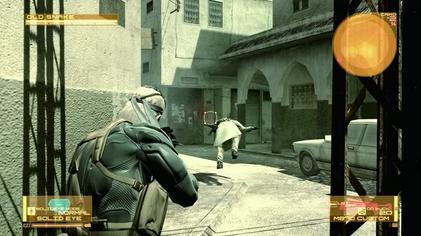
This is poor exposition in a video game.
Games, like movies, can use visual elements to convey certain details of the world without using words (Silent Hill 2’s oppressive setting comes to mind), but unlike movies can also incorporate interaction with the environment to convey the story.
Megan Man X is a great example of this. The first battle where you meet Zero illustrates just how powerless Mega Man is at the beginning of the game because you as a player experience that helplessness. And then, in one line, Zero assures Mega Man that he can one day be just as powerful. And then the powerups deliver on this; there is no sidekick interrupting your gameplay to say, “Hey, MegaMan, you powered up and can <fill in the blank> now!” Nope, you just saw it, and did it. The game designers trusted you to draw the conclusions for yourself (another important point that may come up in future posts).

Fantasy and science fiction genres are usually guilty of the “exposition dump” storytelling. Characters will soliloquy on topics that anyone who actually exists in that world should know about, because the player needs to know it. But do they? What is vitally important for the player to know, and what would be an extra bonus?
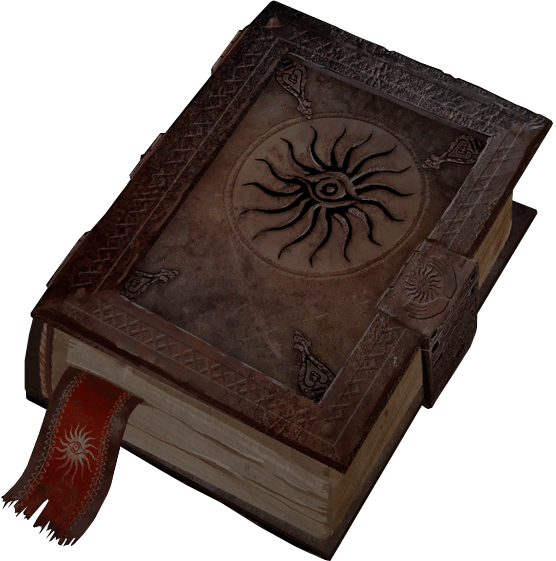
The Dragon Age series finds a good balance with this. I never felt over-burdened by information, even the first time I jumped into the series and was still fairly new to RPGs in general. I played Dragon Age: Origins on an old tube TV, so I didn’t even have the benefit of being able to read the codices (literally. The screen was too blurry), but I still found the world to be rich and engaging, simply from the careful word choices of the NPCs and the interactions I had with the environment. For me, the codices served to enhance the environment, not define it. I almost saw them as Easter eggs – little treats for the people who found them, but not integral to the story if you didn’t.

Comparatively, the exposition dump in a game like Two Worlds II was almost distracting, sitting through long conversations with NPCs who told me who I was, why I cared, where we were, and why that was important. I wasn’t even shown. I felt like the game sat me down and read part of a history book to me. I played the game for a few hours and didn’t really care about the characters, because after being informed of my affection for <fill in the blank> the game assumed I believed it and went merrily on its way.
Contrast this to, again, Dragon Age which gives some background via Duncan the Grey Warden, then gives you, the player, a “reason” to join the Wardens through short segment you play through (where either you (aka your avatar) are tainted by a cursed mirror, you family is betrayed and killed, you are kidnapped, you’re going to be executed, etc.). You are also given a reason to want to stop the Blight. Duncan – your mentor – and the king of Ferelden are massacred in a darkspawn attack, you and your new friend are almost killed, and I’ll show that archdemon who’s boss!

As a hobby writer, this is an aspect of gaming that is very important to me, and may be visited again. But, to summarize, I’ll leave it to Ernest Hemingway:
“If a writer of prose knows enough about what he is talking about he may omit things that he knows, and the reader, if the writer is writing truly enough, will have a feeling of those things as strongly as if the writer had written them.”
Thanks for stopping by, and I’ll see you soon!
–Athena Tseta
What’s next? You can like and subscribe if you like what you’ve seen!
You can also:
– Support us on Patreon, become a revered Aegis of AmbiGaming, and access extra content!
– Say hello on Facebook, Twitter, and even Google+!
– Check out our Let’s Plays if you’re really adventurous!


 Ambigamingcorner
Leave a reply to Athena | AmbiGaming Cancel reply