


We’ve all had this experience: you turn on a game and suddenly you are asked to assume control of the character on the screen in front of you. This playable character (PC) is the little string of code that you’ll be spending 20 to 60 hours leading around the game world, orchestrating every step taken, sword swung, and shot aimed.

But those little people made of pixels are so much more than that. If you read about how non-playable characters are actually real, you’ll have a bit of an idea of why fictional characters are important to us.
However, playing as a character is infinitely more important than interacting with one, particularly in regard to our emotions, empathy, and how we experience the real, physical world.
If You Want to Be Me, Be Me, and If You Want to Be You…
First, we need a solid understanding of what makes people relate to each other. In general, humans desire to feel connected to other humans; we want to feel companionship and camaraderie with the people around us. To do this, we often strive to find ways we can relate to others by attempting to find similarities between “us” and “them,” including personality characteristics, physical traits, ideologies, or life experiences.

Part of how this happens is through what some call “mirror neurons” in our brains, which fire similarly when observing an action as when performing the same action. As the saying goes, brains that fire together, wire together – if your brains are doing the same things, you’re going to feel companionship with the other person.
This is no different in the entertainment industry. For entertainment to be effective, we the consumer must be able to connect with or relate to the characters by believing we are going through the same things as they are. Therefore, we must think that the PC is similar or familiar to us in some way.
The Cast of Characters
In order to present this kind of familiarity, a game may present a PC in a few different ways. These ways may include characters who start off weak but gain experience and power as the game progresses, characters who are powerful from the start and become more powerful, and characters who are not powerful and never become more powerful through the course of their story. Let’s look at each of these one by one.
Weak-to-Strong Characters:
First, a character may start off fairly ordinary, or even weak, when placed up against the fantastical events of the game. This kind of character tends to grow and become the hero. By utilizing a character like this, the game is easily able to make the PC relatable; after all, how many of us are expert swordfighters, space marines, rangers of Gondor, or super spies? But these kinds of characters feed into our belief that we can eventually feel powerful, even if we don’t feel that way initially.
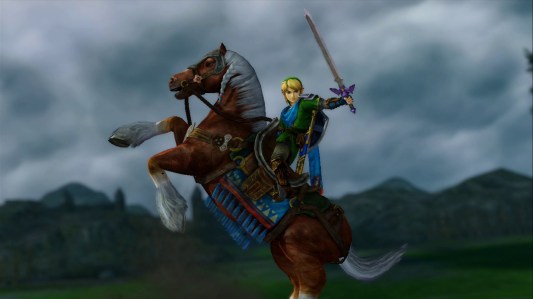
In The Legend of Zelda: Twilight Princess, the player controls Link, as per usual in a Zelda game. However, immediately after completing the tutorial – that is, immediately after feeling fairly competent with a sword and shield – the plot throws Link into the twilit Hyrule, transforming him into a wolf.

It was frustrating. The wolf acted much differently than human Link did, had different attacks and abilities, and players couldn’t wait until they were finally able to play as human Link again…
Interestingly, from his reactions to being a wolf, and his hesitation when he is asked to transform again, it seems like Link doesn’t particularly care for being a wolf, either. The player’s frustrations are mirrored onto the playable character.
Other examples of these types of characters include Mega Man in Mega Man X, the main character in Dragon Age: Origins and Dragon Age II, and Ico from Ico. All of these characters experience a certain level of helplessness or low-level abilities at the beginning of their respective stories, slowly gaining skills and powers until transforming into the heroes of their own stories.
And doesn’t that sound nice: to become, through perseverance, the hero of our own story.
Power Fantasy Characters
A power fantasy character is one that has been designed to appeal to what developers think we want to be. These characters are powerful from the beginning of their story, with overtly fantastic abilities, and who only become stronger as the game progresses. Characters who fall into this power fantasy role appeal to our egos, instead of our humanity, letting us feel powerful, important, strong, impressive, and more talented than we feel in our real/physical lives. Here, we want to feel the way our characters feel. We want to be powerful.
I just finished playing Middle Earth: Shadow of Mordor, and at no time did Talion – the main character – feel underpowered or weak. He was a strong, agile ranger from Gondor, who was able to pull off impressive parkour, stealth, and combative feats immediately upon starting a new game. From there, he only became more powerful. It felt good playing as Talion – Uruks fell at my blade, wild animals bent to my will, and, eventually, I was able to amass an army of my own. It felt good; it felt powerful. No, I felt powerful.
Other examples of this include Geralt from The Witcher III (or any Witcher game), Commander Shepard from the Mass Effect series, and Master Chief from Halo. Characters like this start their stories strong or with some sort of power that sets them apart from others, are self-assured through most, if not all, of their stories, and only become more powerful as events unfold. They are always in control, always right, and never falter.
Isn’t that a nice thought: to feel in control of your destiny from the moment you set out.
Weak and Defenseless
While counterintuitive, the third type of playable character is the one who starts off powerless and remains so throughout the story. These characters are usually found in the horror genre, when the non-playable characters, the environment, and the story seem to be against us as the player/playable character. Characters like James from Silent Hill 2, the main character from Silent Hills’ PT, the various main characters from Five Nights at Freddy’s, and even the main character from Gone Home or 08:46 are examples of this type of relatable character.

Here, the characters tap into our more negative feelings of helplessness and weakness. We understand what it feels like to feel powerless, and so when we experience extreme helplessness in a game like Silent Hill’s PT, we can feel real fear. When we can’t run away in Five Nights at Freddy’s, and have no way to defend ourselves, we feel helpless because the playable character is helpless.
When Fantasy Becomes Reality
Each of the above-mentioned types of characters therefore appeal to us in some way, reaching some part of our emotional being that enables us to reach out and empathize with the character on the screen. We identify with the characters, but more importantly, we inhabit them.
When observing another person, or experiencing another type of media like a book or a movie, we are partaking in something that can be described as “experience-perceiving.” This means that we are taking in information with a fairly detached feeling, even if we are identifying and empathizing with the character on the page or up on the screen.
In video games, however, we as players are experiencing what is happening. When we were transformed into Wolf Link, we were frustrated. When we took on an army of Uruks single-handedly, we felt powerful, and when we turned off Five Nights at Freddy’s, we felt relieved to finally be away from the terrifying restaurant.

This could be referred to as “experience-taking,” and our brains do not differentiate between events experienced in the physical or virtual worlds. As our brains deem all of these experiences to be real, they are, to us, real.
When Games Play Us
Experiencing a situation, as we mentioned, enables us to connect, empathize, and emotionally react to something as if we are in a real world situation. This is regardless of whether we are frustrated and relieved as Wolf/Human Link, we are proud and powerful for saving the galaxy in the Mass Effect universe, or feel hopeless and helpless in a horror scenario.
We, as humans, compare moments in our lives to past experiences that our brain has deemed as “real.” These include things that happen to us in the physical world and, as we’ve seen, things that happen in virtual ones. Because games provide us with a variety of character types, we experience a variety of different kinds of lifestyles and feelings, enabling us to explore different aspects of humanity. Through this exploration, we expand our emotional range as we take on the playable character’s personality, goals, and failings.

In Cart Life, we experience the stress of living in a lower socio-economic status, while trying to run a small business and support ourselves and our families. Perhaps, coming from a middle-class family, this isn’t something you’ve ever had to experience in real life. In Mass Effect, we can live out our fantasy of being a paragon war hero, and in Shadow of Mordor we may explore the desperate, revenge-driven acts of someone who has lost his family. As we experience more and can empathize with people so different from us, we can become more accepting of people different from us in real life, too.
If only we realize the parallels exist.

Creating Yourself
We project onto these playable characters, taking on their goals, plans, fears, and dreams. We feel pride at our actions, and guilt when we make a mistake or unwittingly hurt an innocent bystander. We begin to appraise events in the game based on these constructs, and begin to unknowingly think like the characters. We therefore take on some of their characteristics. We become like the characters we portray.
If they can change how we think, they can change how we behave.
Has a video game ever changed the way you think about a real-life experience or event? Who do we become by playing games?
Let me know in the comments!
Thanks for stopping by, and I’ll see you soon.
~ Athena
For more on projecting onto fictional characters:
Igartua, J.J. (2010). Identification with characters and narrative persuasion through fictional feature films. Communication, 35, 347-373.
Cohen, J., Bryant, J., Vorderer, P. (2006). Audience identification with media characters. In J. Bryant & P Vorderer (Eds.) Psychology of entertainment. New York, NY: Routledge Taylor & Francis Group.
Vermeule, B. (2010). Why do we care about literary characters? Baltimore, MD: The Johns Hopkins University Press.
Or, for some quick-and-dirty reads:
http://researchnews.osu.edu/archive/exptaking.htm
http://www.psychology24.org/why-do-we-identify-with-fictional-characters/
What’s next? You can like and subscribe if you like what you’ve seen!
You can also:
– Support us on Patreon, become a revered Aegis of AmbiGaming, and access extra content!
– Say hello on Facebook, Twitter, and even Google+!
– Check out our Let’s Plays if you’re really adventurous!


 Ambigamingcorner
Leave a reply to 7 Ways We Are Secretly Like the Reapers – AmbiGaming Cancel reply