

We’ve talked about this before, haven’t we? Horror isn’t really my thing. In fact, it is so not my thing that I think I’ve told you guys how not into horror I am at least a few times. So what on earth tempted me to play Until Dawn?
The story, of course. I went in looking for pure psychological horror, and got so much less, and then so much more, than I expected.
Unmarked spoilers below. Skip ahead to “Surviving Until Dawn” for a spoiler-free conclusion.

The Premise
Until Dawn begins like a stereotypical slasher featuring teenagers: a prank goes awry, someone dies, and all the folks involved are brought back together exactly one year later. Horror ensues.
So far, so predictable. To be honest, at first I thought that I had stepped into the game version of I Know What You Did Last Summer, right down to the pretty blonde being the Final Girl if everything else goes poorly. But as the story progressed, I found myself drawn further into the story, and while I was still too scared to completely go looking for all the clues to every mystery the game presented, I was intrigued and found myself puzzling over the information long after the game had concluded.
Because Until Dawn is not the game version of a movie, book, or anything else. Until Dawn is a horror game that explores betrayal, mental health, and relationships in its own unique fashion.
The Story
The the story is revealed slowly as you find clues throughout the game, but the gist is that one teenage girl is lured into a practical joke by the group of friends and, after she flees the scene, she and her twin sister wind up dying. Her brother brings the group back together at the same spot exactly one year later, but it seems like the friends are being haunted and hunted by a crazed Psycho and a creature that has what I lovingly refer to as “murder vision.”

But things aren’t what they seem. The first half of the game is filled with familiar horror tropes, but when it turns out that the Psycho is merely the brother of the twins playing an elaborate, revenge-filled joke on the friends, the tropes become understandable.
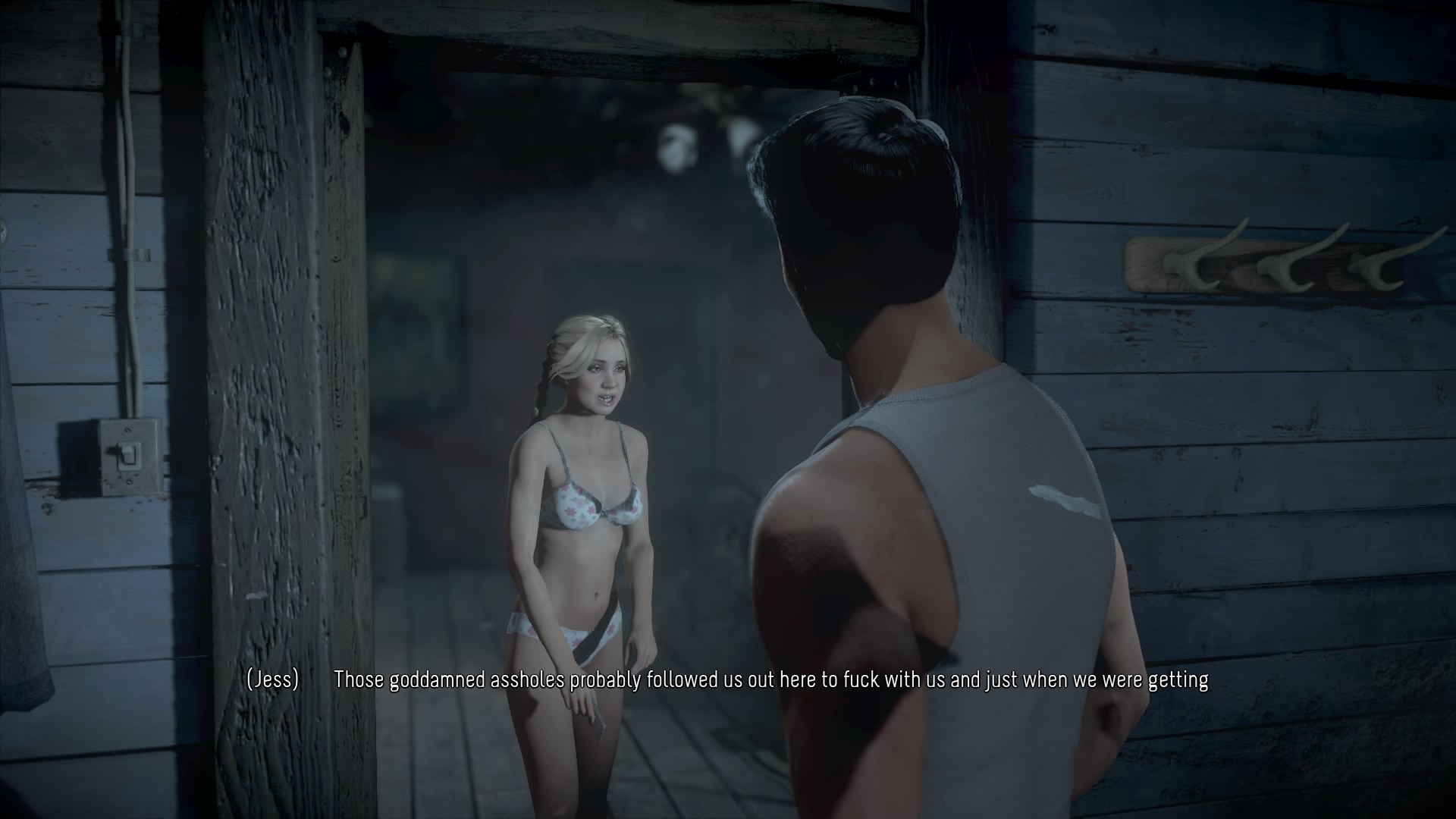
This is when the true horror starts, and a creature called a wendigo begins to, somewhat systematically, hunt the friends. At this point, it is up to you to help the friends all survive, well, until dawn when help can arrive.
The Characters
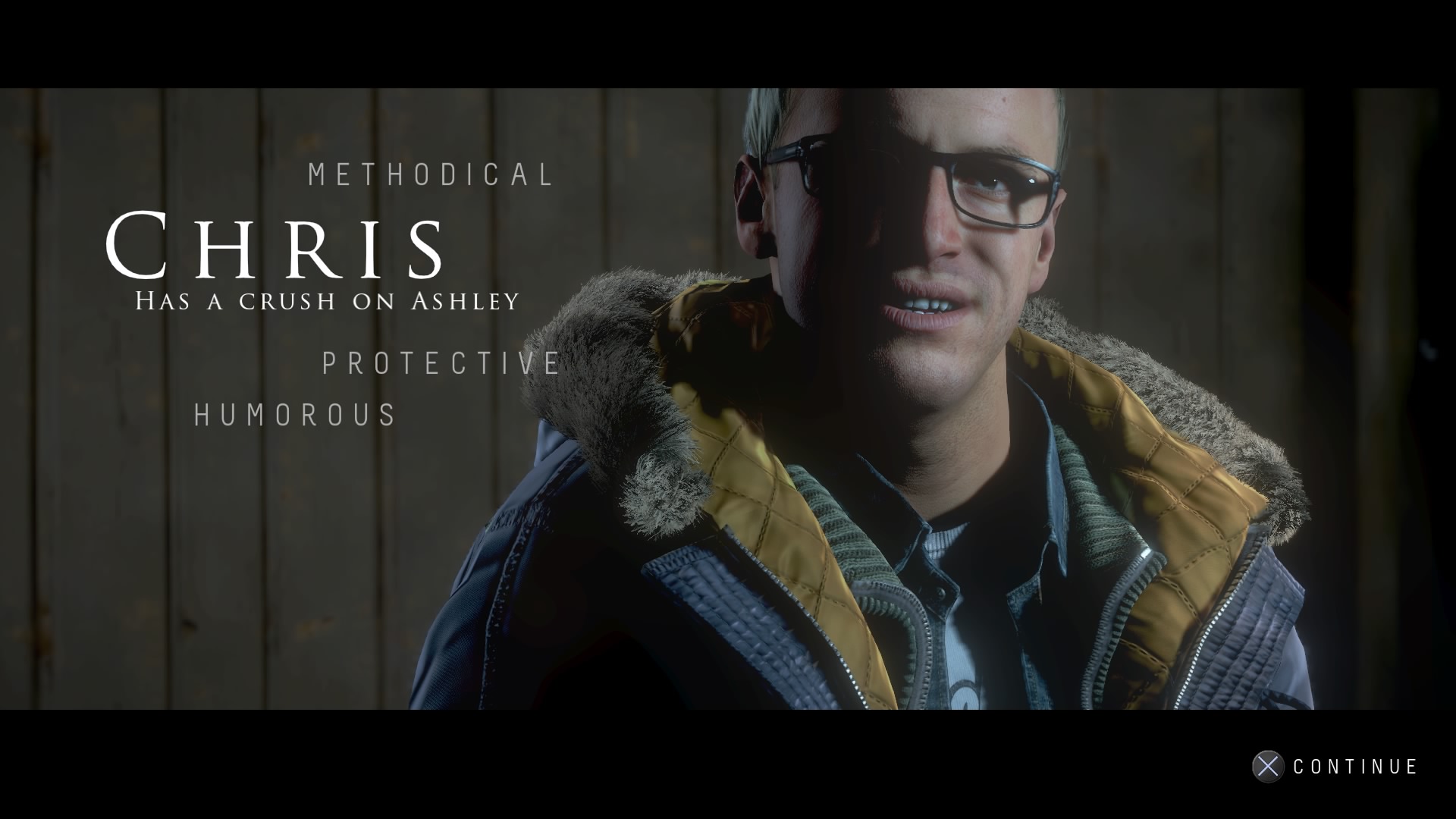
While each of the characters comes with a set of defining features, and the characters relate to each other differently depending on how you play the game, at first glance they do seem a bit like the horror-movie stereotypes. There is the jock, his annoying girlfriend, his nerdy ex-girlfriend with her new boyfriend, the intellectuals, and the one who actually knows what is going on. I fangirl about the characters and some theories I have over on Patreon, but suffice it to say I think how the characters relate to each other, specifically the main and secondary antagonists, is incredibly interesting.

Of particular interest is how the characters relate to each other, as each character has a description that include descriptive words like “intelligent,” but also a brief definition of themselves in relation to another person, usually a love interest. The only exception is Sam, who is defined by her relationship to one of the deceased young women, and Josh, the brother of the sisters who died.
I won’t give away the biggest reveal, but I will point out that the wendigo appears to kill each character in ways that appear to be specific to each of them, which adds a nice layer of detail for the gamer who is paying attention…

So, it is no surprise I found myself so enamored: a deep story, interesting characters, and a finely-tuned branching narrative? What about that wouldn’t I like? But how is the actual gameplay?

The Gameplay
In some ways, I am reminded of Detroit: Become Human insofar as the game consists of some walking, a little bit of picking things up and looking at them, followed by a bunch of quick-time events, and then a series of “forced choice” scenarios that determine a path the narrative is going to take.

But don’t be fooled. These controls are married beautifully and executed in a way that definitely makes for some interesting gameplay. For instance, taking a more dangerous, but ultimately faster, path results in more numerous (and faster times) quick-time events, whereas the safer path is slower and is more forgiving in what it asks you to do.
Decisions occasionally must be made in the heat of the moment, and one wrong, panicked choice can result in the death of a character.
What really keeps it interesting, though, is that the combination of these timed decisions, quick-time events, occasional aiming, and the all-around pressure the game puts on your to be accurate and fast creates real tension as you, the player, feel just as frantic as the character, trying to keep up with button presses, switching your attention in order to make a decision, then thinking you are safe in a cutscene only for another prompt to appear.
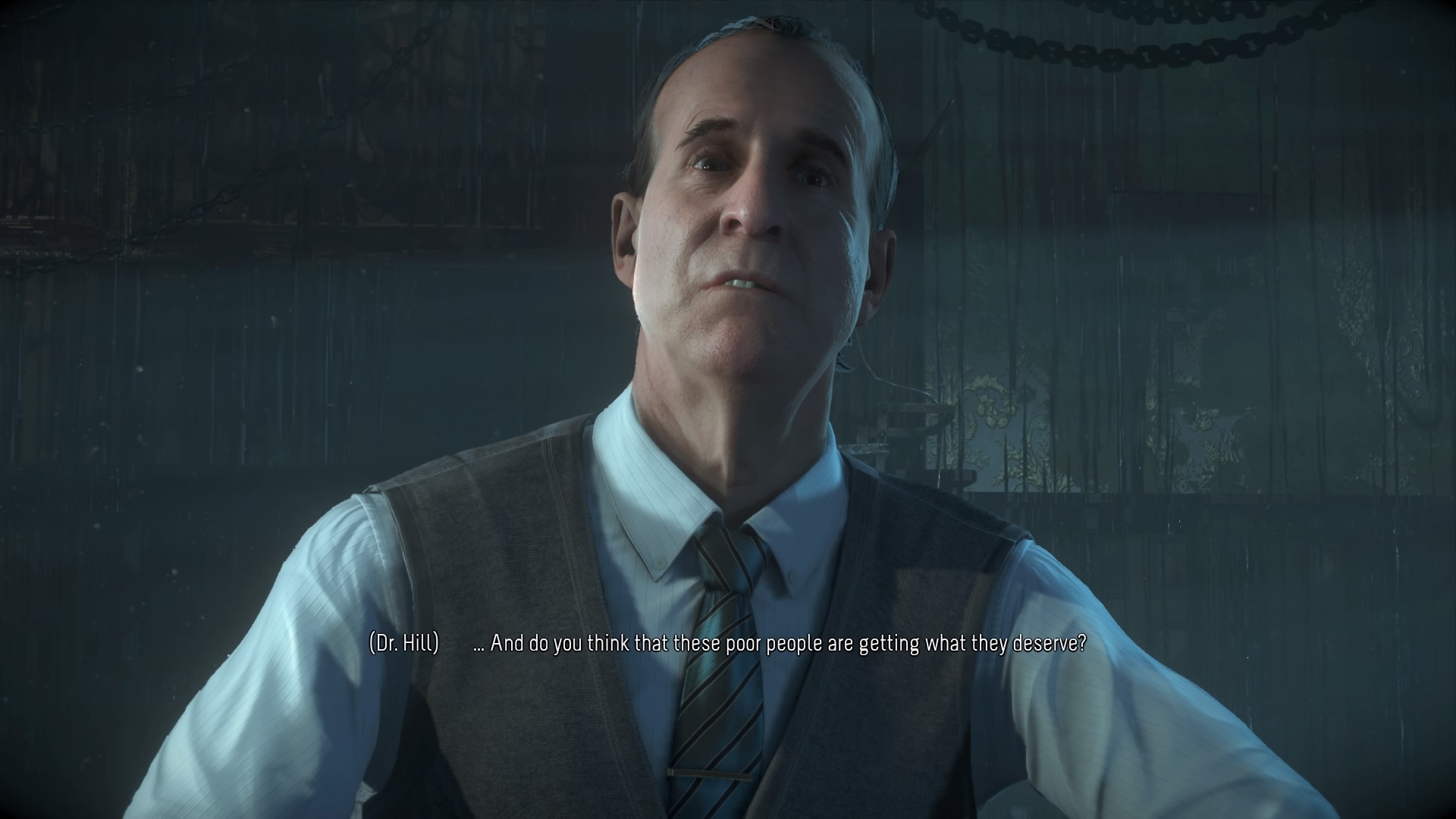
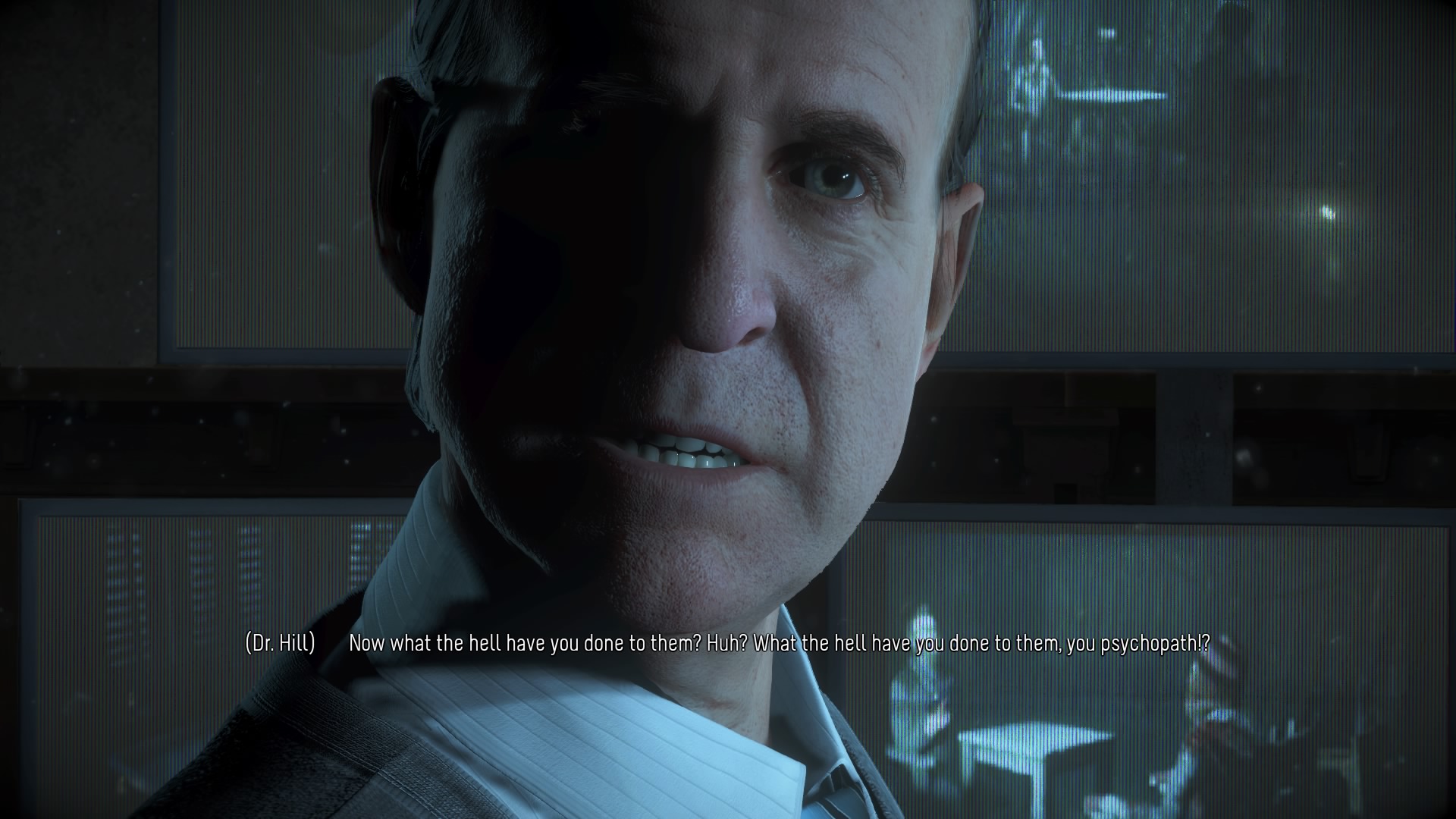
A particularly fascinating part of the game were sessions with Dr. Hill, a (pretty creepy) “analyst,” or psychologist. He appears to be speaking to the player, although this perspective changes as the game progresses. He serves to comment on the progress of the game and ask for the player’s input regarding things that are scary to them (like clowns versus scarecrows). He has varying dialogue depending on the player’s choices, and the slow reveal of his character adds another layer to the fascinating downward spiral the game takes into some pretty dark places.
One minor annoyance was the camera angle, which was a similar gripe I had with Detroit: Become Human. To be fair, I can hardly complain because it wasn’t long ago that camera angles were fairly fixed, but it took me a while to orient (which is my own problem), and I sometimes wishes I could move the camera just to look around the room to double check for landmarks that I had picked up on during a different camera angle, just to make sure I was in the place I thought I was.
The other slight criticism I have is that the jumpscares were fairly predictable. Once finding out that the Psycho is just another teenager, this makes sense as he puts the scares in predictable places, but even during the wendigo portion of the game I found myself half-predicting when the jumpscare was going to happen and, after a while, not really flinching, either. I’m not sure if this was the intent, and I can’t say that I was particularly upset that things popping out at me didn’t scare me anymore, but I guess this speaks to the sheer amount of jumpscares in the game.

All things considered, I found the gameplay mechanics to be interesting and varied enough that I wasn’t ever bored with a quick-time event-filled game. There was enough happening that for most of the game I couldn’t relax, because one never knew when something with a timer was going to pop up on screen (or the player would have to not move. Pro tip: put your hands on a pillow on your lap).
Surviving Until Dawn
In my own experience, I was overall pleased with how the my story turned out. I am still determined to return to a later chapter to correct one pretty bad, video-game-logic-induced mistake I made, but overall my experience was enjoyable and I managed to QTE, decision-make, and “Don’t Move!” most of the characters through the insanity of their adventure and safely to morning, with very little, well, mourning.
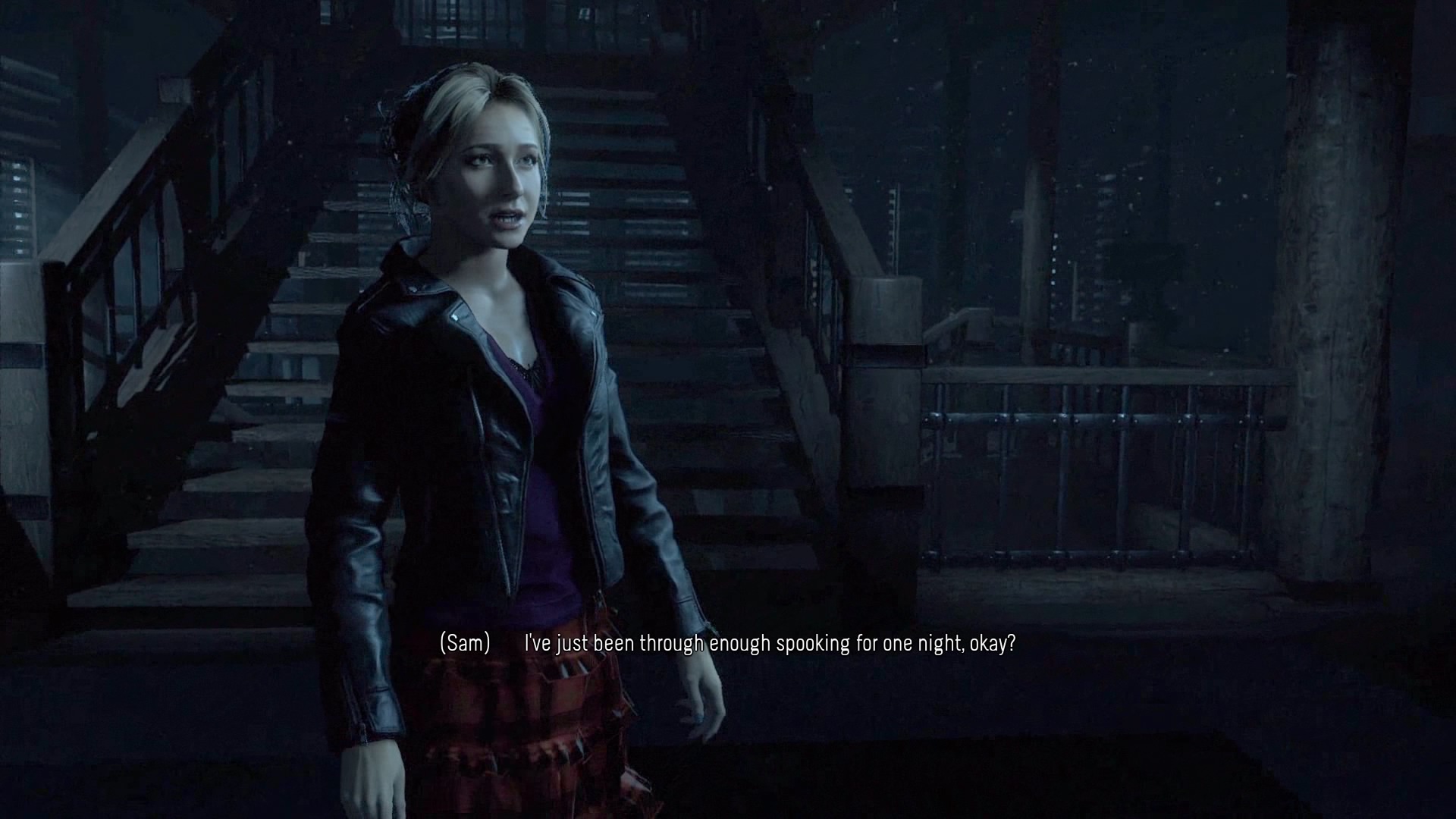
I admit that I often felt a bit like Sam here…
But as the game progressed and I peeled back more of the layers presented to me, I was left with an interesting story, fascinating inter-character relationships, and a whole lot of heartbreak.
Oh, and a blood pressure that was a few points higher than usual.
Have you played Until Dawn? What did you think? How would you rate it compared to other horror games? Did all your party members survive until dawn? Let me know in the comments!
Thanks for stopping by, and I’ll see you soon!
~Athena
Do you like what you’ve read? Become a revered Aegis of AmbiGaming and show your support for small creators and for video games as a serious, viable, and relevant medium!


 Ambigamingcorner
Leave a reply to Athena | AmbiGaming Cancel reply