


Play SOMA, they said. It’s full of interesting existential drama, they said.
And wouldn’t you know it, underneath all the goopy blobs of decaying flesh, that is exactly what I found.
I Always Feel Like SOMA is Watching Me…
Released in 2015, SOMA is a survival horror game developed by Frictional Games, the same folks who brought gamers Amnesia: The Dark Descent, which is another fine horror game that I have steered clear of, but by all accounts is an A+ game that horror fans should definitely check out. With a focus on tight narrative, SOMA packs a lot into its 11 hour punch, focusing on evasion of frightening monsters and slowly unfolding the existential horror of the reality behind main character Simon Jarrett’s existence.
I had reservations about playing this game. For those of you who have been around for a while, you know that I was convinced to play the Prey demo by Shelby over at Falcon Game Reviews and upon booting up the game was torn between being scared and feeling like my head was being squeezed and like I was going to vomit from first-person sickness. So, when promised a really great, philosophical time within the confines of a first-person horror game, I admit that my curiosity was stymied quite a bit.

Then, a few years after its release, I heard that SOMA was given a story mode – with much wailing and gnashing of teeth from core horror fans – that would allow players to experience the story without the main character really ever being in danger from the creepy things. This was not really defined well by the game, as we’ll talk about below the spoilers warning, but still quite a relief to people like me who play games for the story and with wildly active imaginations that definitely don’t need more nightmare fuel.
I still put the game off, feeling guilty when I remembered how enthusiastically The Shameful Narcissist recommended the game to me. Then, another friend asked if I had played SOMA, because it had a story mode, and finally I caved to peer pressure when Kim from Later Levels said that she really thought I would enjoy the themes in it. And so I grabbed my teddy bear and decided to stream it, to minimize having to be alone while playing.
And now here we are. So, without further ado, let’s take a look at the very real questions raised by SOMA about identity, consciousness, and the continuation of each across existence.

…Now Here’s Some Philosophy
SOMA starts out, I imagine, as many a survival horror game do (at least, to judge from my experience with the Prey demo, with our protagonist, Simon Jarret, waking up in his apartment and playing with the physics engine finding out he has an important doctor’s appointment, and reading all the documents in his house to orient him to time and place. As one does when they wake in the morning.
We learn via a dream sequence that his girlfriend died in a tragic car accident, with Simon bemoaning he doesn’t have more time as he slowly regains consciousness to his alarm clock blaring in his ear. From there, we move around the apartment, check to see if we have feet (spoiler: we don’t), and then we’re off to the doctor for a brain scan, in order for a highly technological solution to be designed for Simon’s brain damage, resulting from the aforementioned car accident.
We sit for the brain scan and…

Spoilers below. Huge, huge plot spoilers are incoming. Nothing else about this post will make sense without them, so if you would prefer to experience the story for yourself first (and I do recommend it), now is the time to bookmark this page, play the game, and come back.
Welcome back!
We wake up, as Simon, in this horrifyingly dystopian future, in an underwater facility that has been abandoned by all except the creepiest of fleshy monsters that lumber through the halls, sometimes moaning in pain or “looping” conversational phrases, but otherwise existing to chase Simon around and, apparently, raise my blood pressure.

In story mode, the danger from these creatures is reduced; they can hurt Simon, but not kill him, although this is not ever really stated, and the way this “not harming” is implemented is not consistent, with some enemies chasing after Simon and acting in the way they normally would, but with less/no damage, or sometimes backing away if Simon approaches them, or some strange combination of the two. This led to some interesting moments, when I assumed that the monster wouldn’t attack me, and so I stood facing away from the monster that was very obviously behind me, until it hit me over the head and disappeared.
It also resulted in a few unintentionally funny moments, like when a creature that the internet touted as “the hardest baddie in the game” simply stood aside and politely waited for me to walk through a door, wandering behind me and generally acting more like a puppy than a fearsome creature that should make me fear for my life.

One thing that this did well, however, is keep the player wrong-footed while still feeling “safe.” The monsters couldn’t kill Simon, but I never really knew what we were getting ourselves into from monster encounter to monster encounter.

Through the course of the game, we control four separate Simons. Simon 1 is the one at the very beginning, the one who goes to the doctor. After the scan door is opened and we find ourselves in some strange underwater post-apocalyptic dystopia, we find ourselves being followed by various spooks and horrors until we learn that we are, in fact, a human consciousness put into a robot body – Simon 2.

Eventually, Simon 2 makes another copy of himself – Simon 3 – and, horrifically at the end of the game, Simon 3 makes another copy – Simon 4.
It’s during the copying of Simon 2 that the game throws its first big punch: Simon 1 didn’t “body jump” into the robot body, and Simon 2 didn’t “body jump” into the new robot body needed to progress the story. No, we learn that Simon 1 – human Simon – died 100 years ago, and Simon 2 is now sitting in another room, heavily sedated but still with a separate consciousness to Simon 3, wondering why “it didn’t work.” Simon 3, meanwhile, has experienced no hiccup in his awareness of the world. To him, he is now simply in another body. He is then faced with the impossible question of whether to kill Simon 2 or to leave him in a perpetual “stand by” state of being until his batteries slowly run out in the coming eons.

This decision comes back to haunt us at the end of the game when Catherine – another human consciousness in a robotic form who has been gently guiding us through the game – convinces Simon 3 to “copy” them onto an ARK that is meant to preserve the digitized consciousness of a lucky number of humans for 1,000 years. Simon 3 does so, imagining he will simply make the jump to the ARK, the same way “he” did from Simon 2. When he finds himself still sitting on the chair, Catherine – who has not been above lying by omission throughout the game – tells him that they “lost the coin toss,” and that it is, in fact, Simon 4 and Catherine 3 who are on the ARK, while she and Simon 3 have been left behind.

Meanwhile, on the ARK, Simon 4 is blissfully unaware of the fate of Simon 3, believing he is the exact same consciousness that made the “jump” from Simon 2, then to 3, and now to here.

Taking a Breath
There’s a lot to unpack in this game, and we haven’t even gotten to the steps taken to “preserve” humanity, death, and the absence of consciousness, which will be tackled in a different post.
Last time, I posed a number of questions that I was left with after the first few hours of gameplay. A few of them were wrapped up simply by exploring the game (like “what happened to all the human bodies?” and “Why were the dead bodies needed to create robots like Simon?”), but some of them were not so much answered as explored. These questions all had to do with the nature of consciousness, and the so-called “coin toss” that Catherine kept telling us about.
So, what is consciousness? What is awareness? Can our “analogue” system (the brain) be truly reproduced digitally? What is reality itself (spoiler: it’s made up, as we discovered here)?
In the simplest of terms, consciousness is awareness. It is an awareness of one’s self, thoughts, feelings, physical sensations, and environment.

Using this broad term, there are a great many things that can be deemed conscious, from some non-human animals to the complex self-aware AI that we often come across in video games. These would be your EDIs from Mass Effect 2 and 3, or the androids from Detroit: Become Human.
Sometimes, in the case of robots/androids in games and other sci-fi situations, the one tripping point is having feelings, but it’s possible that being aware of not having feelings is, in itself, an indication of an awareness or a consciousness of feelings, thus satisfying this requirement.

Another potential block is an awareness of “self.” What is “self” and how do we know we are aware of it? Is it a soul, that detail of existence that can’t be seen, heard, touched, or experienced, other than in some nebulous concept that only people of faith believe even exists? Or is it something else? What makes you you?
If you want to spiral into existential crisis, ask yourself how you know that you are, in fact, yourself, and not a copy of yourself, or a program of yourself.
Me, Myself, and I
It is this last part that the game explores: can there be more than one you in existence at a time? If there is biological you, and then a robot copy of you that has all your memories, mannerisms, hopes, desires, and awareness, which one is you? Both? Neither? Only one, by nature of it being biological? When Simon 2 and Simon 3 exist at the same time, it is handled by either “unplugging” Simon 2, or leaving him in this unconscious state for however long it takes for his batteries to run out of charge.
When scientists learn that they have been copied into robots, many responded by “fixing” the problem through eliminating their biological self, believing that their consciousness would continue/jump into the robot.
Unfortunately, this isn’t even reality within the game world. Consciousness doesn’t “jump” from one body to the next. The biological person dies, and a digital version of them – a carbon copy, if you will – lives on. But the original consciousness, the original mind, the original person, has been deleted. It is analogous to copying a Word document, naming in Document 2.0, then deleting the first one. All the same information is there on Document 2.0, but it’s not – and never can be – the original document.
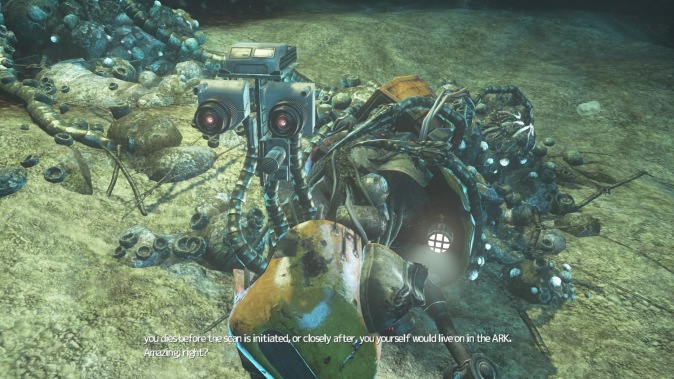
But which one is the “real” copy?
Well, let’s ask Simon.
Fabricating the New You
We have two main concepts at play now: awareness/consciousness, and memories. We’ve talked about consciousness; now let’s talk a bit about memories, a topic we’ve discussed tangentially throughout this blog’s history. In this instance, however, the aspect I want to focus on is that memories are part of what make us us and not someone else.
Our memories include information that we’ve learned, sensations we’ve felt, thoughts we’ve had, and all manner of other stored tidbits of things that have happened to us in the past. We like to say that our pasts shape our present, and our memories/recollections/interpretations of our pasts even moreso.

But what happens when those memories are put into a being that experiences the memories the same way you do? And what happens when that person is aware of themselves as a being, separate but yet the same as you.
Enter the Simons. Simon 1, biological Simon, is the original Simon. His brain is scanned, his mind digitized, and then his biological body dies. Simon 2 awakes with all of Simon 1’s memories up until the scan. This is important later. Simon 2 is, eventually, shut off by Simon 3, who has all of Simon 1 and 2’s memories.
What is interesting is that we, the player, jump from Simon 1, to Simon 2, to Simon 3. To us, this is one continuation of consciousness. Of course Simon 3 is the real Simon, or at least the real robot Simon, because we are in his head. Of course consciousness jumps from one being to another; we the player have just experienced that. To us, the “coin flip” that Catherine speaks of is real. It happens. We lived it. That’s important later.
Simon 3’s final task is to launch the ARK, and Catherine, his intrepid and only companion who we blink in and out of existence with the flip of a switch, promises that we, Simon 3, have a chance at being transferred, via the mysterious “coin toss” that is mentioned at points throughout the game. After much pain and suffering, he does – and I admit as the player, I was glad. I was rooting for Simon 3 to wind up on the ARK and be free of his pain and be given a new body.
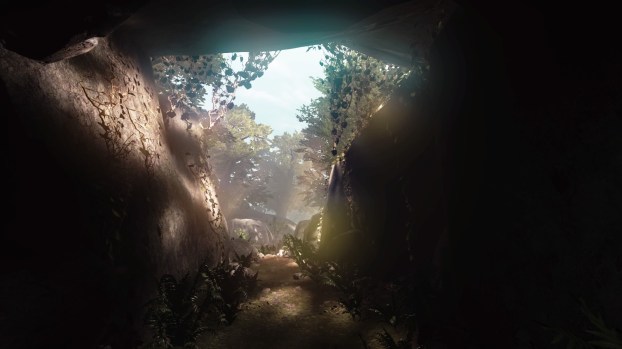
But then, as we found out, something goes wrong. Simon 3 is left strapped to his chair and Catherine is blinked out of existence by a critical failure. It didn’t work. Simon didn’t make it. He and Catherine lost the coin toss.

Except he also won the coin toss. Simon 4 arrives on the ARK, with all the memories of Simon 1, 2, and 3, up until the flipped switch, blissfully unaware that he is a copy, and that he left another copy of himself behind, just like Simon 3 did to Simon 2.
If you asked Simon 4, he would say he was Simon. Of course he was. He had all the memories. He had awareness of who he was. He had consciousness, as per our definition above. He has no memory of being “left behind,” so according to his memories, his consciousness made the jump to the ARK.
If you asked Simon 3, he would say he was Simon. Of course he was. He had all the memories. He had awareness of who he was. He had consciousness, as per our definition above. His experience tells him that he made a copy of himself, and the copy made it onto the ARK. But not him. He’s still on Earth.
But he’s also on the ARK.
Maybe the bottom line is that we fabricate our own realities, but we just never have to face it in how we live our lives.
What Does It Mean?
Ignoring the absolute thick-headedness that Simon demonstrates regarding his understanding of “jumping of consciousness” – possibly in an attempt to validate the experience of the player that we talked about above – we are left with a few unanswered questions.
After all, every Simon demonstrated consciousness. Every Simon “had” history that he remembered. So I ask:
- What are we, if not the product of our pasts? To say a different way, what are we, if not standing on the steps of our memories?
- Are we still “us,” even if our memories are fabricated? even if they have been experienced by another being, then implanted?
Perhaps in the end, it’s futile to copy ourselves and expect our consciousness to “jump” from one body to another. A copy exists in its own right, after all. So then, at what point would our copy cease to be “us” and start being their own person?
Bottom Line
If you’re a fan of survival horror, and want to spend some time thinking about what it means to be human, SOMA is the game for you. I barely scratched the surface with the discussions that could be had surrounding this game, because it’s so very human. How would one react to finding out there is “another you” that you created? What did the WAU (which we didn’t even talk about here) decide is “humanity” that needs to be preserved? Is knowing a digital version of yourself will exist beyond you comforting to you?
The story pulled me in, and by the end I was rooting for Simon 3. I was stressing out, watching the technology glitch as the “upload” bar slowly – too slowly – filled, thinking, “He’s not going to make it. After everything we’ve done…” Only for my heart to break when we came to the ending that I hoped against – but still somehow expected. So in that regard, it did it’s job.

As far as a horror game itself goes, I have little to compare it to, but I was sufficiently creeped out the entire time. I had the usual first-person headache and nausea at times, but I had enough to focus on that I could ignore it for the most part. It’s a game that can pave the way for a lot of deep discussions, and that alone is enough for me to recommend it!
Have you played SOMA? What did you think? Let me know in the comments!
Thanks for stopping by, and I’ll see you soon!
~Athena
Do you like what you’ve read? Become a revered Aegis of AmbiGaming and show your support for small creators and for video games as a serious, viable, and relevant medium!


 Ambigamingcorner
Leave a reply to The Shameful Narcissist Cancel reply