

I’ve been talking a lot about how the Reapers operated on imperfect logic, bestowed onto them by their imperfect creators. We’ve talked about the two different ways alien species have tried to influence organic society, one through gentle guidance (not the Reapers) and one through the threat of annihilation if you don’t obey (the Reapers).
So today I’m going to switch sides and talk about all the things the Catalyst said that were right and logical.
Meeting the Catalyst
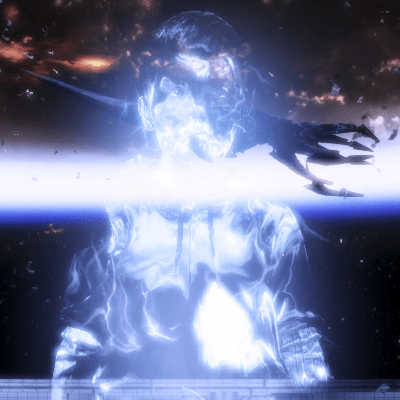
When Shepard meets the Catalyst at the end of Mass Effect 3, bruised and battered, she has the opportunity to learn not only about catalyst, but to also gain a little more insight into the purpose of the Reapers. Unfortunately, the Catalyst is intent on dropping some tough information on the hero, and then asking her to make an even harder choice.
To sum up the discussion, the Catalyst believes that the Reapers are a solution to chaos, built on the conclusion that created will always rebel against creator. In order to stop organics from being annihilated by their synthetic creations, the Catalyst decides to elevate and preserve the organic consciousness within a perfect synthetic form: the Reapers.
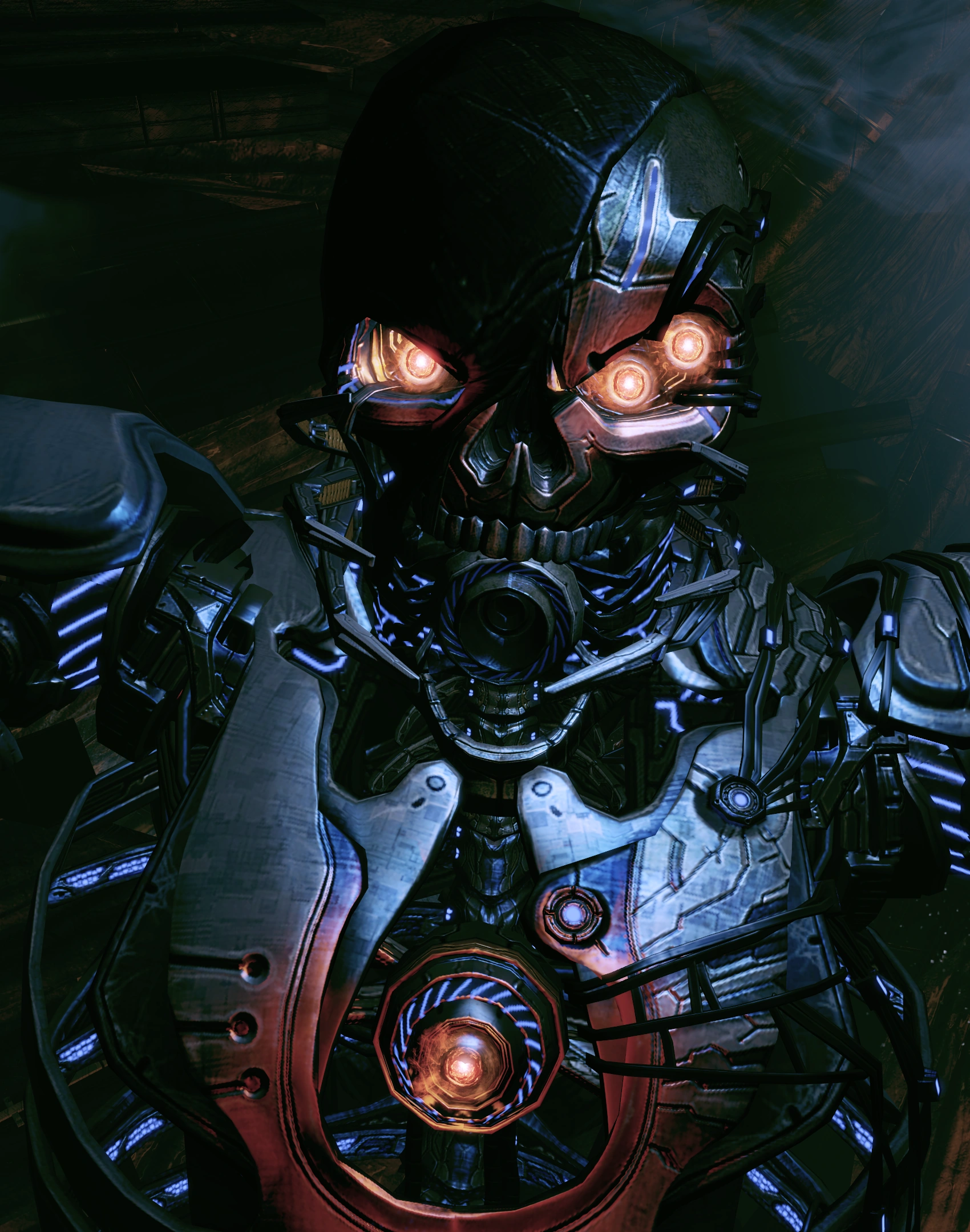
This is technically correct, as we’ll see in a moment. Humanity’s stories are filled with creations rebelling against their creators, and synthetic creations are physically perfect, as they do not feel fatigue (and are therefore stronger), and have processing speeds faster than humans (being better at mental calculations). Synthetics are not prone to poor decisions based on emotions or misunderstood information, and so the Catalyst’s solution perfectly fixes the problem. After all, organics are allowed to flourish and develop, and then are taken to rapture – for want of a better word – before they can create something that will ultimately destroy them.
Historical Background
Literature is full of stories about created overthrowing creators. A few examples would be that of Snow White overtaking her stepmother, the queen, in beauty and “desirability,” the Olympic gods who overthrew the titans, who in turn had been masters of their creators, and, of course, the monster from Mary Shelley’s Frankenstein.

Wherever there is a story of creation, stories of decay and destruction are soon to follow, if not already built into the creation story. This theme of new ideas, younger bodies, and fresh interpretations of society permeate our culture as we grapple with the idea of one day becoming “obsolete” as our children’s ideals begin to rule the world, just as our ideas overtook those that came before. So not only is this dynamic creation/destruction and created/creator thematic, it’s also very realistic. In this way, the Catalyst was correct. The new will always overtake the old.
Credit to Metalika Setiva for this clip of The Rite of Spring by Igor Stravinsky, as illustrated by the fabulous artists at Disney.
Another interesting nod to the literature is the balance between ambition and destruction. The Leviathan tells Shepard [spoilers] that they claimed other species in thrall, believing themselves to be the apex of organic existence (read: gods). But, their thralls always would develop synthetics, only to be destroyed by them. In their arrogance, the Leviathan race decided to create an Intelligence (who Shepard knows as the Catalyst) to solve the problem cleanly. They didn’t realize that their ambition to find a perfect solution would result in the destruction of so many, including their own race. [end spoilers]
Likewise, in Frankenstein, ambition blinds Victor Frankenstein to his fallibility. And, of course, he is so far removed from the society that he doesn’t consider what the ramifications of his actions are, like [spoilers] Leviathan does when creating the Intelligence[end spoilers]. I’m going to stop hitting you over the head with parallels, but Dr. Frankenstein runs away from his creation and tries to hide. Unfortunately, his creation goes on a killing spree, destroying Frankenstein’s family and, ultimately, Victor himself.

Now, this book is not a spot-on match for the story of the Reapers, and I’ve grossly simplified the story and themes in Frankenstein. However, a creature made due to the believed-godlike status of the creator has not ended well in literature, and Mass Effect (and therefore the Catalyst) pull from these themes.
The Next Generation
From this angle, the Catalyst makes a compelling point. The Reapers overtook Leviathan, the geth rebelled against the quarians, and the [spoilers] Leviathan’s thralls were overtaken by their synthetic creations [end spoilers]. The new ideas (i.e., synthetics) were more physically and mentally capable. So far, so fitting with what literature shows us.
The new detail that the Reapers add to this mix is that they do not completely annihilate their masters. While the new overtakes the old, it also preserves the “best” of what came before, like organics preserve the best of their cultures and ideals from one generation to the next.

The Glitch in the Matrix
What the Catalyst doesn’t take into account is its actions to preserve the organics involves destroying a society in order to preserve it. Worse, when tested in a real-world setting, synthetics are willing to work alongside organics, but with one very important caveat: they are treated with respect and consideration.
Tali comments in Mass Effect that the geth were created as laborers, and were repressed when they began to develop consciousness, bascially because the quarians didn’t want to lose their free labor. It was too inconvenient to treat a thinking, reasoning creature with respect, and so those thinking, reasoning creatures fought for their freedom and respect.

But what happens when the geth are shown respect and freed? They immediately turn around and begin helping not just organics, but the very species that enslaved them to begin with. This is in comparison to the Leviathan’s experience [spoiler] whose creations made synthetics primarily as servants so they could worship the Reapers better [end spoilers].
So it appears that there is a fourth option that the Catalyst did not fathom: synthetics and organics working together as equals. That is the key element: one is not an oppressor, and one is not oppressed. The oppressed will always rebel against their oppressors. And, in this case, aren’t the geth “overcoming” their creators? Even though it’s not via destruction, they are overthrowing an old way of thinking.
This cooperation between organic and synthetics is so far outside of the Catalyst’s calculations because, like Dr. Frankenstein, it exists outside of the world around it that it cannot conceive real-world implications of its actions, nor benefit from real-world data it can accrue. Or, bluntly, it wasn’t “programmed” with that data, because it was [spoiler] inconceivable to the Leviathans [end spoiler].
The final irony that the Catalyst resides in both the “created” [spoiler] (by Leviathan) [end spoiler] and “creator” (of the Reapers) camps. The Catalyst is also a “creator” as it has allowed organics to flourish, and “creates” the next cycle for the less-advanced organics to develop.
And thus Shepard, a product of this “creation,” now stands before the Catalyst, ready to destroy the creatures that made her cycle possible.

So it turns out that The Catalyst was right all along: as long as there is creation, there will be destruction, because no matter what you choose, the created will permanently overcome their creators and create a new world.
What do you think of the Catalyst’s assessment of the situation? What about its solution? Are organics and synthetics doomed to fight each other until the end of time unless they are controlled or synthesized? Let me know in the comments!
Thanks for stopping by, and I’ll see you soon!
~ Athena
Is your subscription to our blog not enough? Do you want more AmbiGaming? Of course you do! So you should definitely check us out on Twitter @TheAmbiGamer and subscribe to follow our Let’s Play adventures on YouTube!



 Ambigamingcorner
Leave a reply to Mass Effect Month: Day 12 – The Case of EDI – AmbiGaming Cancel reply