


We’re back with our “thinking about thinking” series! If you’re interested in our previous deep thoughts, check out the Metacognition series. Join us for some deep thoughts (and maybe the occasional not-so-deep thought) about gaming. If you find one you’d like to answer, you can either comment below or write a post and share the link so we can all read your fantastic thoughts!
When will you consider that games have “enough” representation?
Representation is a pet interest of mine, and it’s something I’ve talked about a few times, as well as played a game about. I’ve even talked about how we tend to “gender” mechanics, using certain themes on certain genres of games to appeal to one gender or another, with varying success.
So where does it end? When will I be satisfied? Well, that is an interesting question; I consider myself fairly liberal in terms of social issues, but I am no SJW or man-hating feminist. I believe in moderation in all things. I am idealistic, but I have no problem trying to figure out a way to make reality more ideal than it currently is.
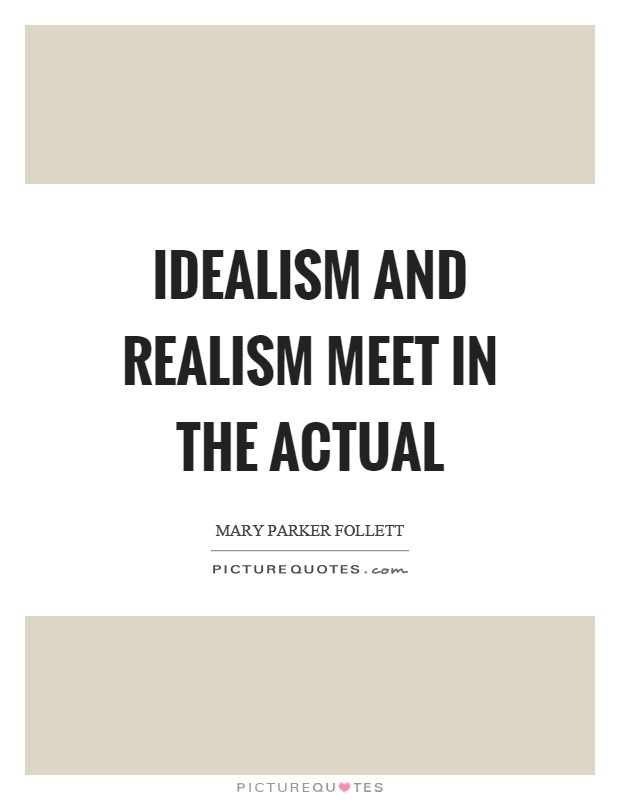
The point is, I don’t think “enough” representation is something that can be quantified, i.e. it can’t have a number applied to it. Having 51% of all video games characters be women because 51% of the actual population are women sounds absolutely ridiculous, because at that point I think representation becomes a forced “checking of a box,” rather than, you know, representation.
A Definition
It wouldn’t be a post at AmbiGaming without a definition, would it? When talking about representation, it is important to remember that is it not just a quota that must be filled in order to appease a loud, irritating throng.

Representation is, instead, defined as either the portrayal of something or someone as being a certain way, or something that depicts a likeness of someone or something else. For our purposes, we are talking about the representation of people. This means that representation is twofold:
- Representation aesthetically demonstrates how people are. This means that in a game that takes place in 700s North America, for example, the characters must not be any other other than those represented in the indigenous people living on the continent at that time.
- Representation characteristically demonstrates how people are. This means that the more internal, personal characteristics of people must be shown, and this is how characters avoid becoming stereotypes or “cookie cutter” characters. It also provides variety. For example, a game about the American Revolution would include the occasionally soldier who was black, but a game about the Vietnam War should have a little more representation. Women are found in many different professions. Italians are more than mobsters. Russians aren’t always the heartless bad guys. And so on.
Stop Ruining Our Fun
But Athena, you might type. We have had some great years for women in games! We are making progress! Aloy is a great lead character, and Uncharted:The Lost Legacy has two strong, three-dimensional women as lead characters! And… Your list would continue.
Herein lies the pickle, though. On the one hand, by talking about an issue, it becomes An Issue. On the other hand, the fact remains that, for instance, is a great female protagonist, which may or may not be good for games, as we’ve discussed.
This is where my idealism comes in. In an ideal world, we would not see people as “unequal” due to gender, race, or whatever other arbitrary label we feel like using. Each person would be accepted as a person, with strengths and weaknesses due to who they are as a whole, not due to one characteristic or another. Or, perhaps even more importantly, if there is a strength or weakness that is found across one group (e.g., men need less sleep than women, women have a higher pain tolerance than men, etc.), it won’t be used as some childish idea of “proof” that the other group is lesser somehow.

It is at that point that I will lay down my mantle about good representation, because we won’t need media to show us how things could be anymore.
So what am I asking for? I’m certainly not asking for women and people of color and folks of the LGBT community and other minorities groups to be stuffed into games just because Representation Must Occur. No. Not at all. I would hate that, and I’m sure you would, too.
Honestly, I want us to continue on this trajectory, where minorities are seen, and are seen as viable “characters,” and more than stereotypes or set pieces. A blogging friend once said that there are studies showing that girls will related to men more readily than boys will relate to women, but I am reminded of something Gal Gadot said, in passing: “It’s because we’ve had no choice.”

Maybe little boys could relate to women if they saw women doing the same things that men can do. Maybe if children saw men and women doing the same things as each other, they would all grow up believing that was both possible and acceptable.
More Than Games
There is so much more to representation and equality than what we see on a screen or in our media. It is how we are raised, it is what we are taught, it is the total of what we are exposed to, it is the fact that no one’s art should be policed because it is “distasteful” to another group, regardless of how philistine it may seem or what ideas – even socially harmful ones – it may express.
So yes, my lovely readers, we have made great strides in games. We have made strides in gaming culture, which is beyond the scope of this particular blog post. But to answer the original question, I will think there is enough representation in games when people are finally seen as equal to each other out in our society. When it’s not so nice that we have such representation in our media, it just… is.
What about you? When is enough representation enough? Is this an issue beyond games? Or is there no problem at all? Do you think this article is a harbinger for articles to come? Let me know your thoughts in the comments!
Thanks for stopping by, and I’ll see you soon!
~Athena
Do you like what you’ve read? Become a revered Aegis of AmbiGaming and show your support for small creators and for video games as a serious, viable, and relevant medium!


 Ambigamingcorner
Leave a comment