


You’re playing a game, and all of a sudden, you get a little notification:
…or
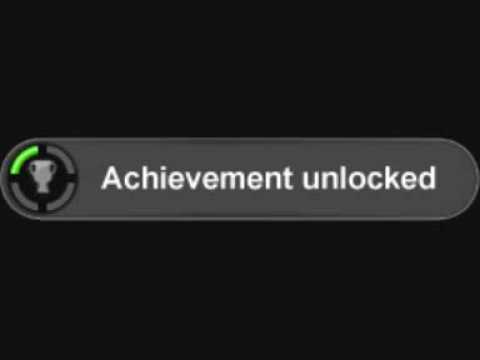
And you feel a little thrill. You just achieved something pretty cool! After all, you were given a trophy or an achievement, and now you want to share it. So you tell your friend or take to social media, and are met with praise for your achievement, but then there is always that one person who has gotten the trophy and the one on the harder difficulty, or platinumed a game (or six), and they just so casually drop it that you think that maybe your great achievement wasn’t quite good enough.
What Gives? Social Hierarchy
Social hierarchy is a concept to familiar to many species; in fact, it’s familiar to any species that has a defined social order, from ants to bees to dogs to dolphins to rats to gorillas to people. This kind of hierarchy helps us navigate through social interactions, providing clear expectations for interactions and clear “roles” for each member in the hierarchy. While some may bristle at the idea, hierarchies are, at their core, neither good nor bad. They exist, and the extent to which they are implemented determines whether it encourages people to better themselves in the eyes of their peers – achieving a higher rank – or makes people feel unwelcome at best and oppressed at worst.

Within Society with a capital S, there are subgroups with their own hierarchies. Academic institutions, governments, families, and even communities of hobbyists have their own hierarchies that must be adhered to. As such, it’s not surprising that gamers have also tried to establish a hierarchy within the gaming sphere, trying to prove (or gain) status through in-game achievements.
Like the trophy.
Trophies and Achievements
Trophies and other in-game achievements have so much potential for good that it seems almost unfair to blame them for the unnecessary posturing that happens in the gaming community, but to give credit where it is do, trophies can be used as a force for good as much as a force for posturing and gatekeeping.
One shining positive for in-game trophies is the sense of personal achievement that they induce. It’s one thing to expect a trophy and get it – for instance, because you completed a plot point in the game – and quite another to be playing and suddenly be surprised by the trophy notification, telling you that you did something cool. We all like achieving things and so seeing that rewarded is immensely gratifying.

Trophies can also encourage gamers to play it in a way that they might not have otherwise done. For instance, InFamous for the Playstation 3 has 50 trophies that can be earned during gameplay. Some of these are story-related, and in the case of inFamous that means that you’ll have to have one “good” playthrough and one “evil” playthrough to achieve all of the story-driven trophies. This by itself already forces the player to play differently than he or she might normally do. I tend toward wanting to be a “hero” when I play games, so being forced to be the supervillain was an interesting experience as I tried to distance myself from my own character.
How easily I was manipulated into harming innocent people, all for the sake of an in-game trophy. But that’s a discussion for another time.

Some of the other trophies in inFamous are skill-based, challenging the player to, for instance, kill a certain number of enemies while riding on top of a moving train or vehicle.Or to use a “thunder drop” ability and (basically) fall 500 meters off a building onto an enemy. Are these things that I would have sought out to do normally? Nope, but the trophies made me curious, and I practiced and practiced these insane maneuvers until I was finally successful.
And boy was it fun! All precipitated by an in-game trophy.

These are fairly innocuous uses of trophies, both in-game and by the player. They provide intrinsic rewards and only cost the player a little bit of time. We start getting into a hazy grey area when players start using trophies to demonstrate – or even attempt to enforce – superiority over other gamers because of their trophy achievements.
Social Currency, Gold, and Platinum
At this point, the trophies/gamer score becomes a kind of contrived social currency, with the player attempting to cash in his/her trophies for social standing, prestige, and authority.
A Brief Definition
Social currency is defined as (paraphrasing) the resources gleaned from a presence in a social network or community. This can relate to a brand – meaning the value consumers associate with the brand based on “word of mouth” or other socially-driven reputation means – or to a person.

What this means is that the more “social currency” we have, the more valuable we are in the eyes of The Target Group we are interacting in. Being more valuable can result in better things for us (or our brand) – authority, respect, prestige, money/other resources.
All that Glitters
When it comes to society, we have more-or-less well-established ideas of the things that add value to a person’s standing. Usually,these things relate to either altruistic actions a person takes for the betterment of society, even moreso if it is to the detriment of themselves, or to amazing feats that a person accomplishes that cannot otherwise be achieved by the average person, such as immense artistic talent, intelligence, or physical prowess.
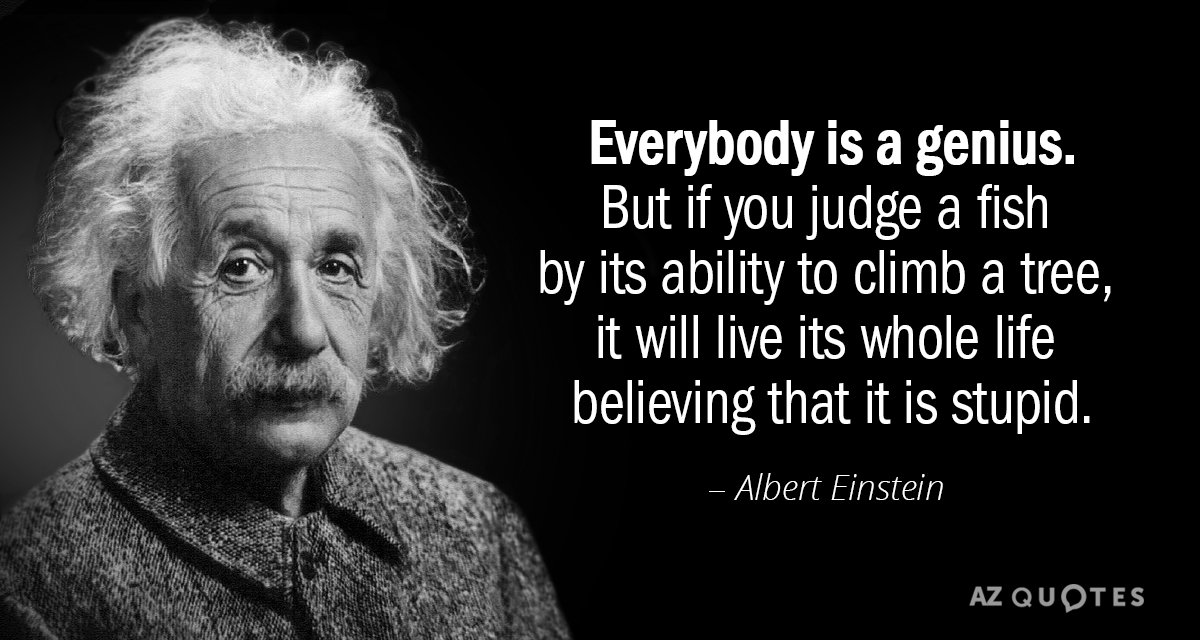
But the thing is that respect can only be given. It cannot be taken.
And so it is with social currency.
Why Trophies Can’t Buy Love
It’s possible that trophies could have been, at one point, a way for gamers to establish some sort of social standing. After all, the people who platinum games spend more time with a game than people who do not platinum games (although this isn’t necessarily true), and have taken the time to play the game in the many different ways the developer has suggested. This shows dedication and skill that other gamers might not otherwise have.
Except it doesn’t. When people brag about their platinum trophies, or asserts that the amount of trophies they have somehow accords them more social standing, the response is often disdainful. Often, the social response is something akin to a slow clap, followed by a sarcastic “hooray for you for spending 1000 hours playing the same game.”

So why does this type of bragging persist? What might be the reason to force such a scorecard onto other people for something that is not only trivial, but so often socially seen as worthless in regards to social currency?
Society and Competition
The simple answer is that people like competition. Plain and simple. If we feel like we are in competition with each other, it motivates us to strive to be better than we are, and motivates us to win.
Of course, this means that we need to feel in competition with each other in order for “winning” or “losing” to mean anything from a social standpoint. If there is no competition/feeling of competition, then someone saying “I win” is meaningless.

For trophies, there is generally a feeling of “sure, if I had more time to sink into a game, I could do that, too,” so when a person brags about their trophies, it has as much social meaning as bragging about how much free time you have. People don’t compete for free time so, in plain English, no one feels in competition, and so it’s only seen as annoying when someone jumps around saying they are the best at having free time.
So Are Trophies Good or Bad?
Like everything else, they are a neutral thing. It is how they are used. Are guns good or bad? You might use them to hunt for food, or you might use them to kill innocent people. When it comes to games, a player might collect trophies for his or her own enjoyment or to feel a sense of accomplishment. Maybe the player collects trophies to experience the game in different ways. In these cases, trophies are a good thing. And, you’ll notice, that in these situation, people are much more willing to praise the person’s accomplishments.
But, if a trophy is used to beat other people over the heads and declare them inadequate as gamers, or when then are used as a way to exert (false) authority over another person, or to demean them in some way, then instead of unlocking achievement, they instead become embarrassing social demerits.
What is you opinion on trophies? Have you ever been trophy-shamed? What was the most fun you had earning a trophy/in-game achievement? Let me know in the comments!
Thanks for stopping by, and I’ll see you soon!
~Athena
**Do you like what you’ve read?** Become a revered *Aegis of AmbiGaming* and show your support for small creators and for video games as a serious, viable, and relevant medium!
For more on this topic:
https://www.sciencedirect.com/science/article/pii/0191886995000355
https://epdf.pub/structural-holes-the-social-structure-of-competition.html
https://www.sciencedirect.com/topics/medicine-and-dentistry/social-hierarchy
http://gamestudies.org/1101/articles/jakobsson
https://www.psychologytoday.com/us/blog/socially-relevant/201506/the-psychology-competition
https://www.gamespot.com/forums/playstation-nation-1000002/so-whats-the-point-of-trophy-26543495/


 Ambigamingcorner
Leave a reply to Athena | AmbiGaming Cancel reply