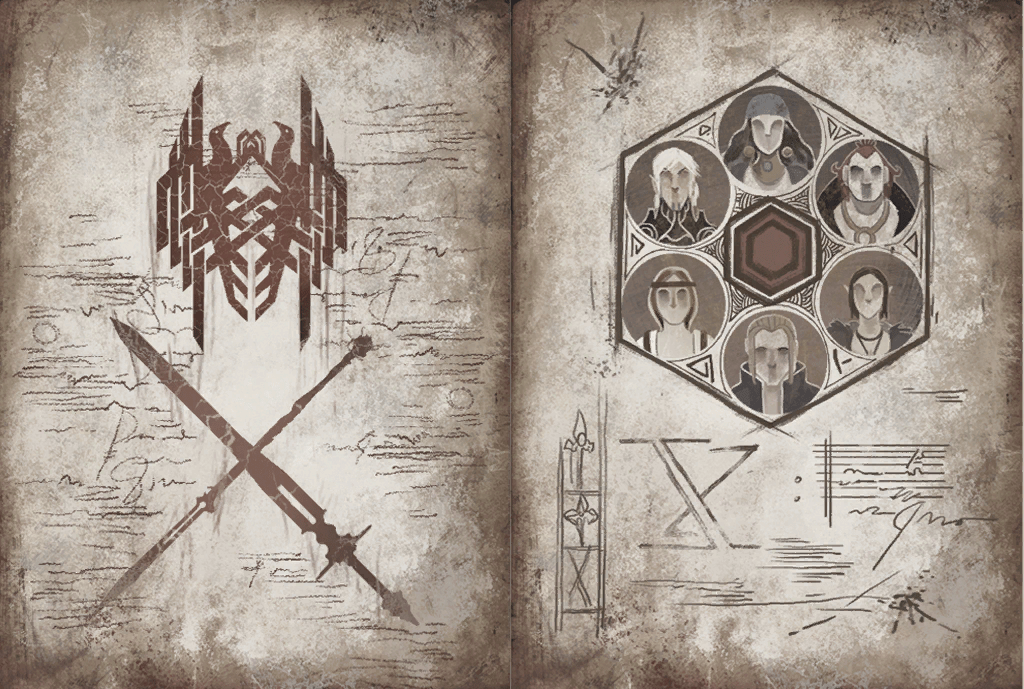


A long time ago, I wrote about how sometimes good stories and even innovative mechanics can be overshadowed by boring gameplay. I mentioned that I would turn that lens onto Dragon Age II, as well. So here we are, about to discuss the merits and failings of this five-year old game. I suppose this is also going to be a bit of an apology letter, too, for all the times I unfairly hated the game and wrote it off due to its flaws.
Fair warning: I’ll be talking about the Dragon Age series, so beware spoilers for Dragon Age: Origins and Dragon Age II. Don’t worry, Dragon Age: Inquisition will be under scrutiny at a later date!

First, a little perspective. Dragon Age: Origins was released in 2009 after a seven-year development period, and after the success of the original Mass Effect in 2007. Following the acclaimed released of these original games, BioWare began work on sequels, with Mass Effect 2 being released in 2010 and Dragon Age II in 2011.
However, development for the Mass Effect sequel began in earnest in 2008, whereas Dragon Age II had the ambitious development schedule of one year. For those of you who have played both series, certain aspects of Mass Effect were held over from one game to the next, whereas Dragon Age II (DAII) recycled virtually nothing from Dragon Age: Origins (DAO).
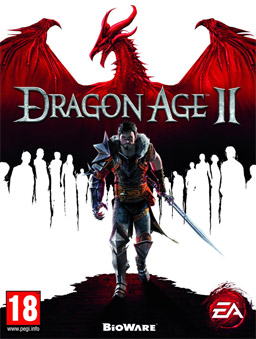
With a shorter production time than DAO and a push to create all new content (again, unlike ME2, which had some holdover from the original game), the race was on to finish the second Dragon Age game. In addition, DAII was meant to respond to criticisms of DAO, particularly what some called the “slow” or “clunky” combat – which actually had “dice roll” mechanics functioning behind the scenes in a Dungeons & Dragons-esque fashion. At any rate, the combat was streamlined and made much faster than in the original title.
Considering actual development took a little less than a year, it’s remarkable that the game functions as well as it does. BioWare certainly pulled off some wizardry in order to bring the world of Kirkwall into existence.
That Was Then…
When I first played this game, I was disappointed at the best of times and angry at the worst of them. The careful combat system that I had begun to master (sort of) in DAO was gone. Now I had to hack ‘n’ slash my way through wave after wave of enemies, and often these enemies would respawn without good in-game reasons and in the most random of places during a battle (for example: kill a baddie, turn around, then new baddie spawns over old baddie and sucker-stabs Hawke). The clearly-different game areas of DAO were now copy/pastes of the same dungeons, underground caverns, shorelines, and basements over and over and over again, to the point of distraction.
And on a more personal note, I hated how ugly they made the elves. I read a nice fan theory that tried to explain this away, but the unfortunate thing is… well…

The game was, in my opinion, sloppily done. Its short production time clearly showed in the gameplay, and my beloved BioWare delivered a sub-par experience that made me want my Warden from DAO to show up and just fix it.
Not really, but you know what I mean.
…And This is Now
Like the story in Remember Me (linked again here), all the good things in Dragon Age II were grossly overshadowed by everything going wrong.
First, the scope and scale of the game was fantastically done. At the end of DAO, our Grey Warden had successfully united a country on the brink of civil war, defeated an archdemon containing the spirit of an ancient magister, and either died a hero or rode off into the sunset with Leliana became Commander of the Grey in Ferelden.

How do you start a sequel after that? No, seriously. You saved the world. How do you top that?
The short answer is: you don’t. While I’m not up on my deckbuilding the way BadgersAndBowties is, I am aware of something called “power creep,” during which new content slowly outstrips the power of the old/original content, prompting an increase in power across the game. This cycle continues, which eventually can harm gameplay if not controlled (for a variety of reasons outside the scope of this article). But from a story perspective, this type of creeping can ruin the story, as each increasingly grand tale becomes more wild, unrealistic, and, eventually, hokey.
So DAII did something drastic, insane, and amazing. They took a complicated world state with so many complex issues bubbling beneath the surface and focused in on one person trying to make a living in one city during this very unstable time.
Compare and Contrast
It’s really hard to compare the first two games in the Dragon Age series, because they are so starkly different. DAO presents unique backstories from which the PC character can hail. The game offers a great deal of freedom in how you can build your character, resulting on one of my Wardens being a high-leveled rogue who was also able to wear heavy armor and dual-wield two longswords.
The story of your Grey Warden feels open, with up to five or six lines of dialogue to choose from at each interaction that created a real sense of crafting your character through small deviations in dialogue. As part of the well-developed story, the characters offered may opportunities for you to talk to them, and you could talk to them anywhere, like real people.
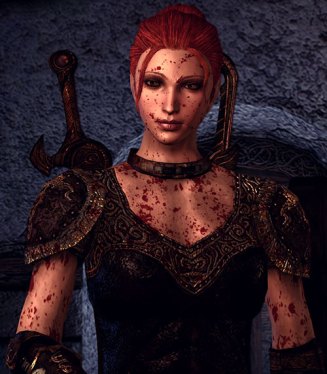
DAII, however, gives you one backstory to play with. Although the story is interesting in theory, it isn’t ever really fleshed out well (more on that in a bit). The gameplay was much more scripted insofar as you can only speak with your companions in designated areas, and the dialogue wheel only offered small snippets of phrases that left you guessing as to what Hawke was actually going to say. And there were only three of them (due to voice-acting constraints, I suppose). Jarringly (to some DAO fans), combat also moved away from tactic-driven to action-driven combat, and the leveling system was more streamlined and almost constricting in some ways.
So right out of the gate, the games were incredibly different. But let’s start with some of the strengths DAII brings to the table.
Just the Facts, Hawke
The overall story was solid. Across three acts, the player/Hawke was introduced to just a superficial taste of the unrest in Thedas, as if the game was saying, “This is important, and it’s affecting your life, but you’re not going to be the hero who fixes it.”

Sure, I wished some things were expanded upon. I wish the mage/templar conflict had been more overtly present across the three acts, and that every single apostate wasn’t a crazy, murderous blood-mage. Yes, I wished we had spent more time with Hawke’s sibling, instead of glossing over a whole year in Kirkwall that elevated Hawke from street rat to someone the entire city knew.
The game does a great job with bringing the scope of the Dragon Age universe down in order to illustrate one small slice of a huge problem that was beginning to shake the entire continent. Like I mentioned, after the huge quest presented in Dragon Age: Origins, there needed to be a story to “reset” the series in order for it to grow again.
However, knowing that the “main” conflict was the mage/templar conflict, BioWare could have presented the conflict a little more clearly, instead of leading the player to believe that the treasure hunt was the main conflict… no wait, it’s the arishok and his qunari wanting to invade Kirkwall… no wait…
Are You a Witch or a Warrior?
Oh boy! More choices! More grey areas to explore! More reasons to play through the game twice to see what the different choices change!
So this might be a slight rant, but the choice at the end of the game was not presented in an even-handed way. While both the mages and templars verbally provide ample evidence as to why you should support their cause, every single mage outside of the Circle’s control was not only a blood mage, but a murderer (even Merrill, in her own sweet and misguided way).
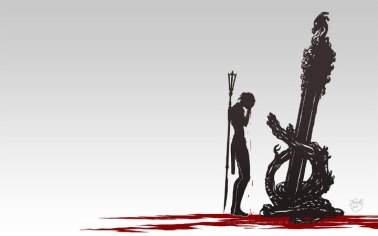
Apparently, mages can’t quite figure out how to handle themselves without the policing of the templar.
Yes, yes. Some argue that the mages were so oppressed that they had no choice but to turn to blood magic. Yes, I’ll agree with that. But were they so oppressed that they had to start murdering innocent people who hadn’t oppressed them? Did they all really need to be so power hungry and/or crazy?
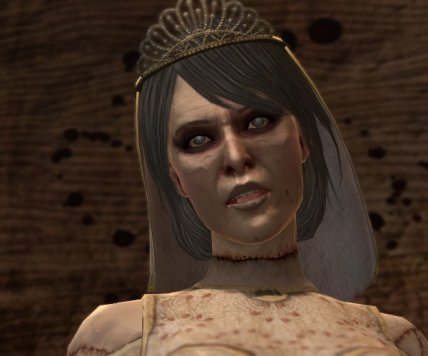
Also, right before your final choice, a blood mage kidnaps Hawke’s mother, murders her, and stitches her head onto another woman’s body before reanimating the Frankenstein’s-monster-esque creature before Hawke’s eyes.
As if that wasn’t bad enough, Hawke then needs to re-kill her mother because the blood mage controls Zombie Mom now and ordered her to attack.
…
So… do you want to support the mages in their fight against the templar, Hawke?
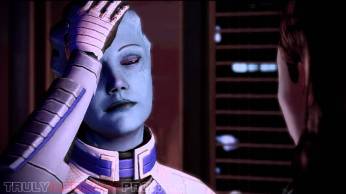
How does anyone seriously support the mages after that? Seriously, if you did, please tell me in the comments. This was an incredibly unbalanced choice and skirted the lovely grey area that was captured so beautifully in Dragon Age: Inquisition. I’m still not sure if the devs did that on purpose, because it’s not a secret that the “canon” ending is Hawke siding with the templars, but the entire argument of “mage vs. templar” was completely unbalanced. I liked the balanced choices at the end of Mass Effect 3 better than I liked the “balanced choices” at the end of Dragon Age II. But I digress.
All the Fuss
To be fair, BioWare tried to respond to the criticism from Dragon Age: Origins, from quickening combat to streamlining the leveling system, and pulled off a remarkably playable game considering the time constraints on them . And folks who played Dragon Age II before playing Dragon Age: Origins tend to love it, which makes me wonder if the folks who played Dragon Age: Origins first just wanted more Dragon Age: Origins – a more nuanced game, to be sure. So DAII’s failure to live up to that expectation, coupled with the mechanical flaws, resulted in the game winding up being panned by fans of the series.
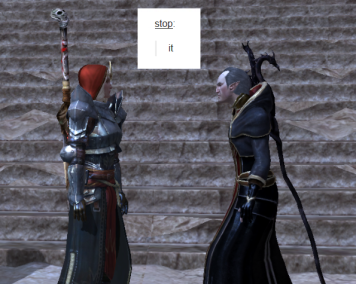
Was it a “good” game? It depends what you mean by “good.” I played it through, grumbling, but I wanted to finish it for the sake of the story (like Remember Me). And the characters stuck with me long after I finished playing, and even prompted a second playthrough so I could try different things and get to know them better. My dislike of DAII reminds me of my distaste for The Legend of Zelda: Skyward Sword. I loved Twilight Princess, and simply wanted more of it when Skyward Sword came out. When Skyward Sword was so drastically different, I was disappointed and missed some of the really amazing features that the game has, in favor of grousing about its flaws. And so it was with Dragon Age. Dragon Age: Origins is arguably one of my favorite games (if not my favorite game), so when I saw another Dragon Age title, I fell right into the same hole that I did with Twilight Princess.
Bottom Line
So… was Dragon Age II objectively bad, or just not what the fans wanted or expected? Sure it had its flaws, and some were glaring, but if you played it without having another game in the series to compare it to, perhaps its flaws are forgivable. I’m not sure. What I do know is that it probably isn’t the awful game I originally found it to be.
Perhaps it’s the awkward child of the Dragon Age family, but like all BioWare games, it presented interesting characters and a fascinating story, even if it could have benefited from a few storytelling tweaks. Either way, it brought the series down to a more personal and human level (compared to the superhuman level Dragon Age: Origins ended on), which I think was a much needed reset for the series. While it will never be my favorite of the series, I think Dragon Age II deserves a bit of an apology, at least from me. At the very least, it’s a game worth playing.
What do you think? Why does Dragon Age: Origins garner such praise and Dragon Age II so much hatred? Is it deserved? Let me know in the comments.
Thanks for stopping by, and I’ll see you soon!
~ Athena
What’s next? You can like and subscribe if you like what you’ve seen!
You can also:
– Support us on Patreon, become a revered Aegis of AmbiGaming, and access extra content!
– Say hello on Facebook, Twitter, and even Google+!
– Check out our Let’s Plays if you’re really adventurous!



 Ambigamingcorner
Leave a reply to Aether Cancel reply