


Welcome to our third and final part of this Held Hostage miniseries on the effect of violence in video games on gamers/children. For part one (an introduction to the topic), click here, and for part two (delving into the research pertaining to children), click here.
Backstory
Over the past few weeks, we’ve discussed the differences between violence and aggression, posed ideas about desensitization and observational learning, and jumped into research pertaining to whether or not video games make adults and children more aggressive or more violent. Long story short, the answer is that video games do cause increased aggression in children and adults, which can lead to violence, but video games, by themselves, have not been shown to cause an otherwise non-violent human being to become violent.

But there’s so much more to the story than what this research has taken into account.
Someone I know very well told me a story, and I’ve put here with permission:
[It’s hard to believe now, but I was the kid everyone picked on in school.] I didn’t have friends growing up. […]It’s a long, complicated, and probably boring story, but the main point is that there was one girl who hated me and she had minions, and I had the final school-bell that meant I could go home and get away from her.
By that time [Athena’s note: 6th-8th grade], I was starting to play more violent video games, like Grand Theft Auto. I remember putting GTAIII, then Vice City, into the Playstation, finding a nice perch, and sniping random people in the game. Sometimes if it was a really bad day I’d name them after the girls at school, right before I blew their heads off. I’d beat pedestrians to a pulp with baseball bats, ditto with the names. I’d feel nauseous and relieved, disgusted and powerful. Of course I didn’t do that when my parents were in the room, but it doesn’t take a rocket scientist to know the kind of game GTA is even without the mass murder.
They’d comment about the missions, on how not nice some action or another was, or couldn’t I think of another way to finish the mission without killing people, or how awful it was that the character would just hurt people without a thought. Didn’t those other people matter at all? Why are you killing that shopkeeper? He’s probably trying to support his family.
One day, during gym class, we played softball. The bell rang, and I stayed back to help clean up. Hopefully the locker room would be mostly empty by the time I got there. I was carrying a wayward bat, and [The Bully] came up behind me and tried to rip it out of my hands. One of the teacher’s aids saw her and commented that she shouldn’t bother me right now. “I wouldn’t do that, [insert name of bully]. She has a bat.”
Then a horrible thing happened. I thought about how good it would feel to really smash her head in with the bat, like all those times I’d beaten someone to a pulp in a game to make myself feel better. And this time, it would be the last time I’d have to do it. I’d finally be free of her. And it would feel so good, and I’d feel as powerful as I did in the game. And maybe as nauseous.
How awful that someone would just hurt people without a thought. Didn’t those other people matter at all?
I thought about what hitting her would mean. Like, really mean. Her head thumping like a melon, blood everywhere. Her lying crumpled on the ground, never moving again. In real life. Because of me.
She let go of the bat, blew a mocking kiss at me, and then I watched her walk away.
Outstanding Factors
The reason I put this story here is because there are so many undercurrents happening, and many of you commented on them last time. This story so accurately illustrated the complex relationship between video games, aggression, violence, personality, and environmental factors. Many of you commented on other issues that the research tends not to address, and the non-gaming community seems to ignore. I thought it would be a nice example to reference as we continue trying to unravel this issue and decide where to go from here to remedy some of the very real issues surrounding this topic.
Parental Involvement
As many of you commenting, parental involvement is an incredibly important aspect of this issue. Knowing is quite seriously half the battle, and knowing the maturity level of your child and what type of media you think they would be able to handle is the first step. From there, depending on the subject matter, parents can provide insight and “reality check” of sorts, like my friend’s parents did when providing a different context to the violence in the Grand Theft Auto games.

As we talked about in part two, observational learning is incredibly important and studies have shown that children and teenagers will still defer final judgments of information – from gender roles to other behavioral learning – to what their parents show them and tell them.
Many of you commenting on the difficulty of being a parent, and you’re right. Parents bear a great deal of responsibility when raising children, and there is a difference between being a good parent and being a “nice” parent. Sometimes they overlap, but sometimes, to quote Sondheim, “nice is different than good.”
Video Games vs. Backyard Games
Some of you mentioned the difference between video games and the backyard games that permeated our childhoods. I, for one, remember playing “Ninja Turtles” in my friend’s backyard, and the two of us would swing sticks at each other as we alternated between being one of the Turtles and being whatever villain we had cooked up.
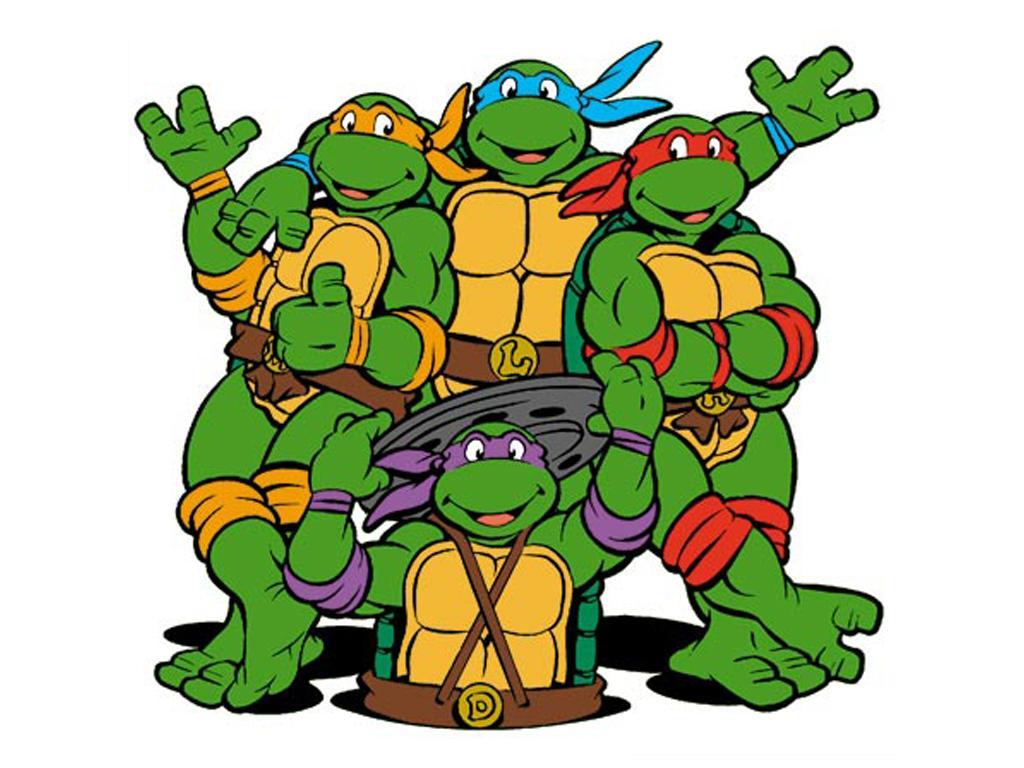
I would imagine that physically trying to hit someone with a stick should be higher up on the “dangerous” list in regards to risk factors, yet none of our parents minded, other than to tell us to not actually hit each other, for somewhat obvious reasons.
I thought about this for a good long while, since I couldn’t find any existing literature comparing backyard games to video games, and it struck me that the point I made above was acted out in these games: we were mature enough to know the danger of actually hitting each other, and our parents reminded us that we were supposed to be having fun, not hurting people.

Everything about our real-life game was concrete insofar as the implications of violence. We didn’t actually hit each other, and accidental whacks were met with negative social responses from both our peer and our parents – i.e., negative extrinsic responses.
Meanwhile, in the Grand Theft Auto example above, beating someone to a bloody pulp was met with a feeling of stress relief, as well as the monies, weapons, etc., that came along with killing a character – i.e., a much more positive extrinsic reward. And without some sort of counterbalancing social input, perhaps from a parent, to provide context or an alternate explanation, acts of violence are both intrinsically and extrinsically rewarding. And since our brains don’t distinguish between real and virtual experiences, these supervision-free violent games could, in theory, be a little more dangerous than the supervised violent games of our backyard.
Nature vs. Nurture
I could talk about observational learning all day, and that would fall into the “nuture” category. For those of you who may not know, “nature versus nurture” is an age-old debate about whether human behaviors are defined by “nature” (that is, driven by a person’s genes) or by “nurture” (that is, their environment and experiences).

This is a debate that could go on for many a page, but my two cents on the subject is that we are made of a little bit of both. After all, if you have a piece of granite (nature) and you polish it as much as you can (nurture), you will never produce a diamond. You may wind up with a very nice piece of granite, but it will be granite nonetheless.
So what does this mean for violence and video games? Well, like the story above, a person’s nature and a person’s environment will affect them. My friend may have been a little more aggressive to begin with, or maybe even had some “violent tendencies,” since she took such enjoyment in killing her game characters, but perhaps her empathy (i.e., her disgust during the game) was nurtured by her parent’s vocal disapproval of the violent actions in-game. Thus, when the opportunity arose, she didn’t act on her violent tendencies. But that doesn’t mean she didn’t have them.

But, one thing to keep in mind is that games do allow you to practice actions – shooting, fighting, etc. – and so, perhaps, for those who would act on those tendencies (nature), video games have just made them more efficient at it (nurture).
One very important point to note is that there is no evidence that supports that mental health disorders such as schizophrenia, depression, bipolar, or others, put people at a greater risk of violent behavior. While some believe that depression can be caused by repressed rage, and rage can certainly cause violent behavior, it is overly simplified and incorrect to state that, for instance, people with depression are more likely to be violent than their non-depressed peers.
Where to Go Next
It seems like there is still a lot left to interpretation, and so many factors to consider, so what can we do? While I have a few ideas, this is another opportunity for us to discuss as a community where to go from here. Consider the following:
Starting at Home
Like anything that deal with child development or the development of behavior patterns, the journey begins at home. While this blog has an audience of readers who obviously play, enjoy, and are educated about video games, non-gaming parents/relatives may not realize that video games must be monitored for content just as much as books, movies, music, and television shows. The Game of Thrones series is a fantastic series, but I would not let my 7-year-old read it. Heck, I wouldn’t let my 7-year-old read a Harry Potter book past the first or second one.

Quick Fix 1: Know the rating system – Become educated on the video game rating system; it’s in place for the same reasons the movie rating system exists. “R” rated movies are not for children, and neither are “M” rated games. “PG-13” movies require parental discretion, and so do “T” rated games.
Quick Fix 2: Have a screen time/violence budget – This might be controversial, but be aware of how much violence children are seeing in the media. Children’s cartoon, movies, and video games all have violent elements to them. It’s good practice to have children turn off the screens and play something else, and there are resources available online that explain how to balance media and other activities, as well as provide guides as to how much “screen time” is developmentally appropriate for the development of little eyes and little brains.

Quick Fix 3: Be aware – Know what games your child is playing, and keep televisions/video games/computers in common areas. This helps with Quick Fix 2 and also…
Quick Fix 4: Be involved in your child’s media habits – Know what you child can handle, because every child is different. But remember that they are still children and still learning. You, as a parent, are their safety net, you are the one providing structure to their lives, and you are latticework that they will grow up around, trusting you to guide them true. Talk about what’s happening on the screen, and give perspective that children don’t innately have, and perspective that they might not receive or understand via the game/media.

Education at the Community Level
All of this responsibility doesn’t fall squarely on the parents alone, though. Having a strong community and resources available at that level are also of paramount importance. After all, movies and books have rigorous review processes, and they have been established long enough that the general population is aware of and understands how to appropriately shop for child-appropriate media. Unfortunately, change at this level is harder, but there are a few goals we as a community could reach for.
Community Goal 1: Campaign to make video game rating systems more universally known and easy to understand. Having clear guidelines that are clearly labeled on games are of paramount importance. We do this already, via the ESRB, but the education of what those little stamps mean is also important.

Giving our ratings system what is called internal and external validity is incredibly important. This means that the system will always (or almost always) rate the games appropriately, and that consumers can trust, for instance, an “E” rating to be the same across platforms, and have clear, communicable expectations so the public can understand the ratings.
Community Goal 2: So is knowing that the ratings are important. The Motion Picture Association of America had a great PR department, and their rating system is, for the most part, understood and followed. We should keep promoting game ratings as valid and necessary to follow, just like movies. As we continue to promote games as more than just a child’s plaything, I think people will start to better realize the importance of following ratings.
Community Goal 3: Advocate to be a part of changes happening within the community, and don’t let government interference happen because “Big Brother knows better.” The guys in Congress don’t always know best, so work with organizations that advocate for games and realistically represent the needs of the community to keep video games from being mislabeled and dismissed further.
Don’t Fear the Critique
I work in a small field that is often misrepresented. We have, as a whole, become very defensive when people make reasonable critiques of the profession, because we have been so primed to be alert for any attack. And so it is with the gaming community. The only way for any medium to continue to develop is through analysis and honest critique.

Of course we must defend ourselves against outlandish claims, but discussing the parts of our community, our culture, or our industry – even to point out its flaws – is the only way to bring about change, so long as the discussion stays objective and fair.
Final Thoughts
As the saying goes, it takes a village to raise a child. So much responsibility falls on the parents – and, I suppose, rightfully so – but without the proper community supports, this already-demanding job becomes much more difficult.
As a community, we still have a lot of growing to do, especially to educate those who do not play video games about the realities of our medium. Games can have a profound effect on our lives, and on children’s development, and so to do nothing is to be complacent in the mishandling of a powerful tool that can shape the very development of our children.
What do you think? Have I asked too much of parents? Of our community? How do you think we should handle the issue of violent video games causing increased aggression – which could lead to violence – in children? Let me know in the comments!
Thanks for stopping by, and I’ll see you soon!
~ Athena
For more on socialization and parents as behavioral role models: http://gozips.uakron.edu/~susan8/parinf.htm
For a fast, easy-to-understand summary of nature vs. nurture: https://www.simplypsychology.org/naturevsnurture.html
What’s next? You can like, subscribe, and support if you like what you’ve seen!
– Support us on Patreon become a revered Aegis of AmbiGaming, and access extra content!
– Say hello on Facebook, Twitter, and even Google+!
– Check out our Let’s Plays if you’re really adventurous!


 Ambigamingcorner
Leave a reply to Fern11 Cancel reply